
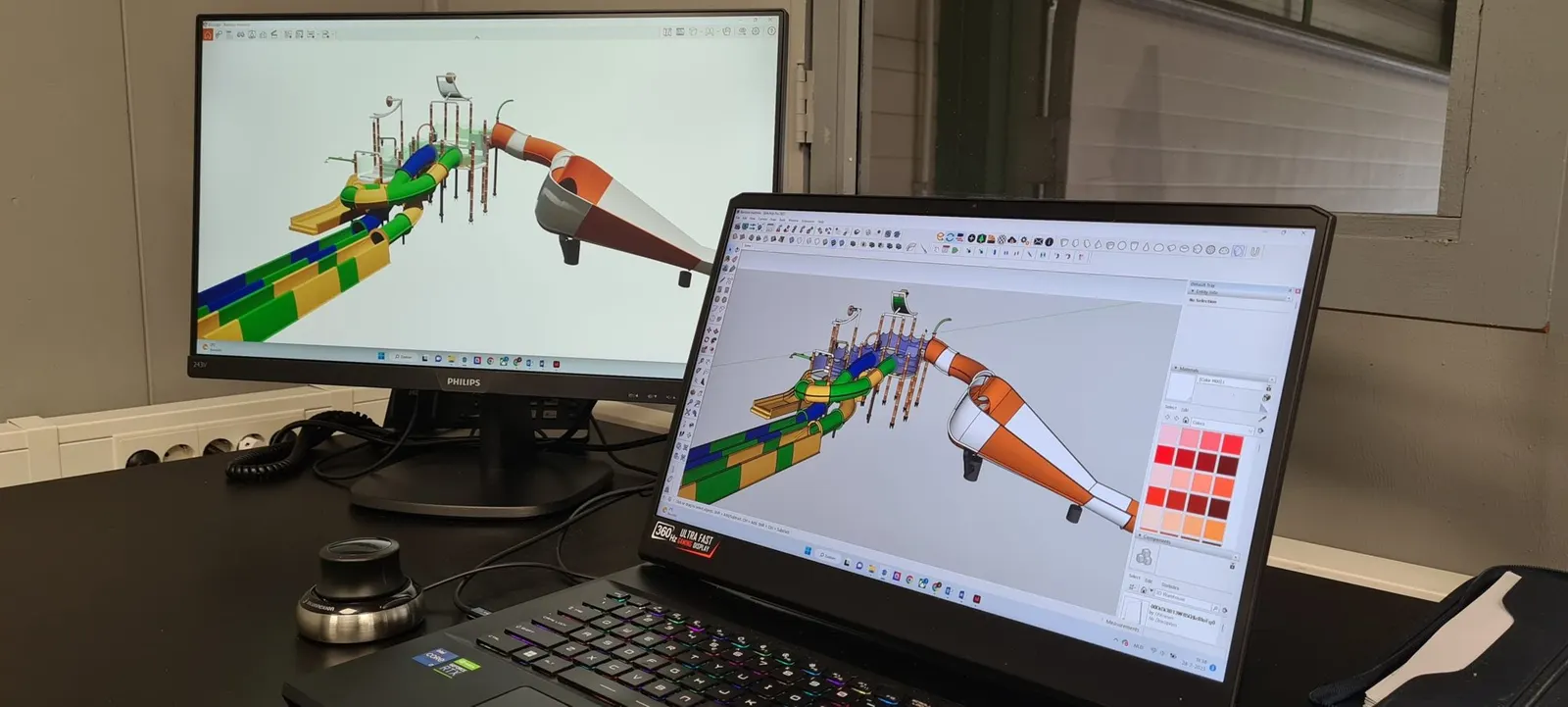
Slide simulation and safety
Before a single slide section is made, we know how the ride will go: how fast, how hard the bends feel and how the rider lands.
Why we simulate every slide
Every AVASTO slide is custom-made. The height of the start platform, the space available, the pool the slide ends in and the target group differ from project to project. That is why there is no such thing as a standard calculation.
By simulating the sliding behaviour, we can see during the design phase how a rider travels through the slide. This lets us adjust bends, gradients and the run-out while the design is still on screen, rather than after the slide has been built. That is safer, and it avoids costly modifications afterwards.
A safe slide is also a more enjoyable slide. A ride that accelerates smoothly, flows through the bends and ends calmly inspires confidence. And that is exactly why guests want to go again.
What a simulation looks like
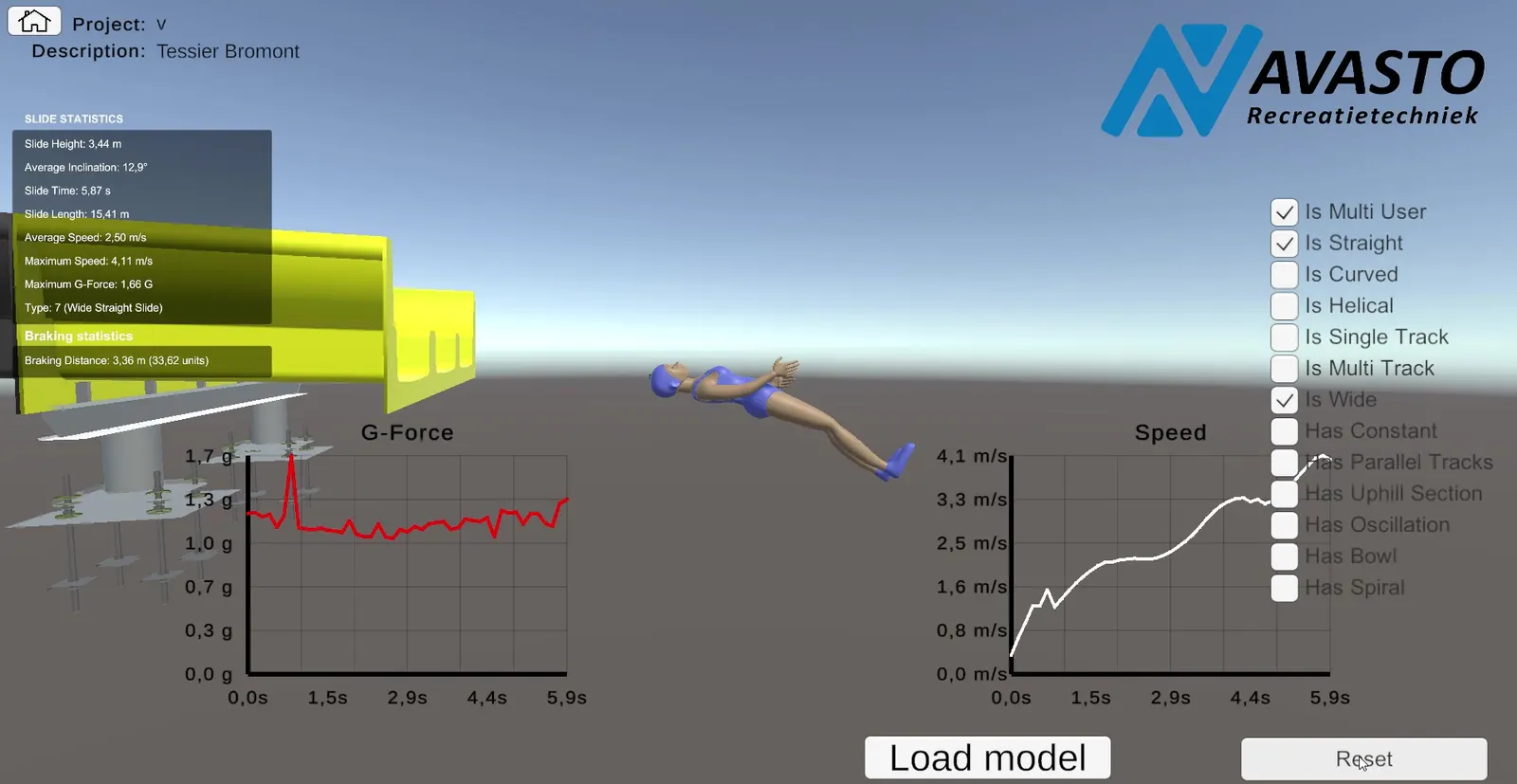
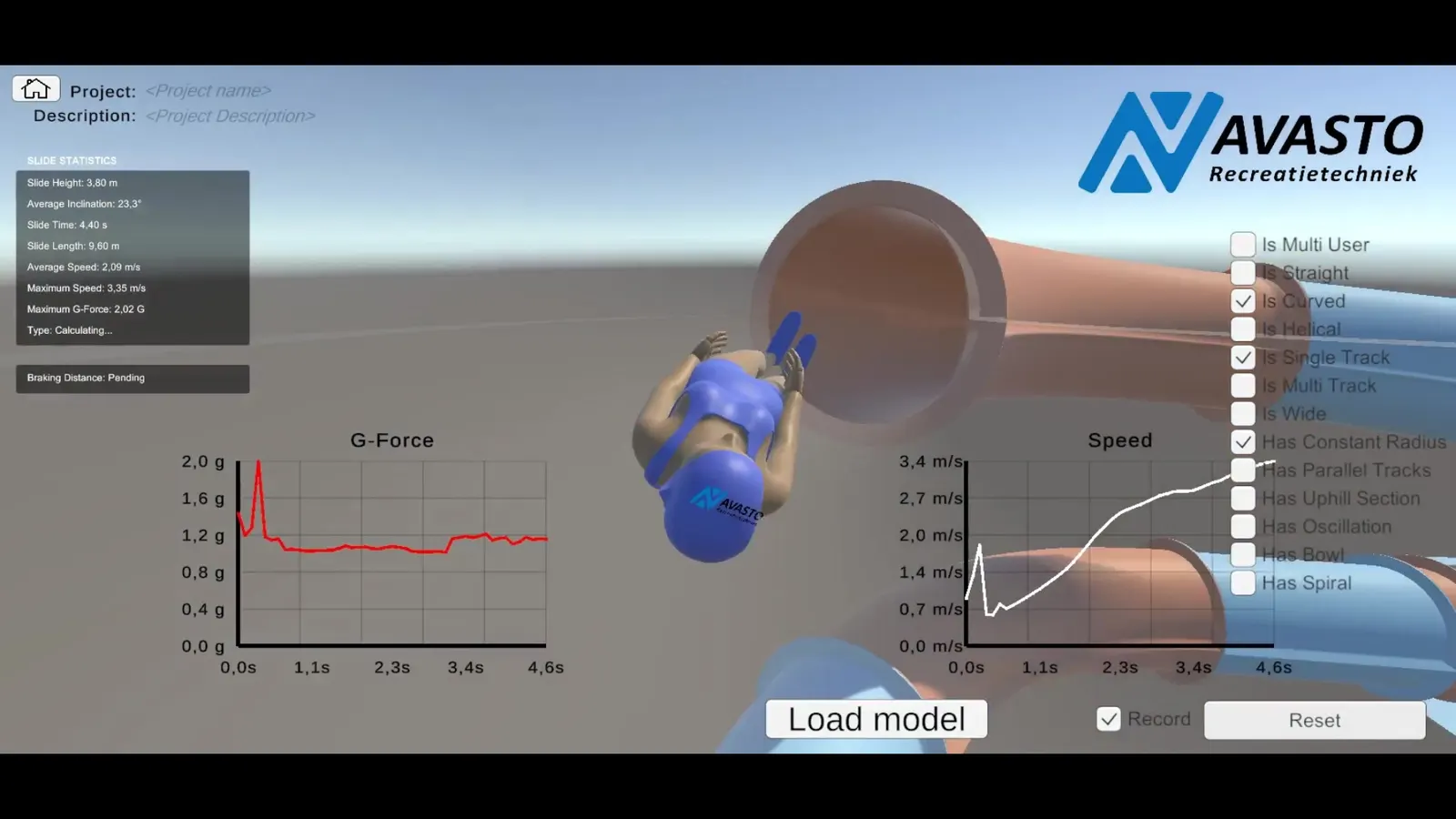
Two images from our simulations. A rider travels through the 3D model of the slide while graphs show the G-force and speed at every moment of the ride. This shows us exactly where a rider accelerates, where they are pressed into a bend and how calmly the ride ends.
What we calculate
Along the entire slide, from start platform to exit.
Speed along the slide
How fast the rider is travelling at every point of the slide. Speed helps determine the slide type under the standard and the requirements that apply to bends, run-out and landing.
Acceleration in bends
In a bend, the rider is pressed against the slide wall. We calculate that acceleration (in g) for each bend. NEN-EN 1069-1 limits how high that acceleration may be and how long it may last.
Ride-up in the bend
How high the rider rides up the wall on the outside of the bend. From this we determine the required wall height and superelevation, so the rider always stays inside the slide.
Run-out and landing
The speed at which the rider reaches the final section and how they slow down: in a run-out, a splash-down pool or the pool. This determines the length of the run-out, the water depth and the clear space in the landing area.
Water, rider and sliding aid
Sliding behaviour depends on more than the shape of the slide. The amount of water on the sliding surface, the rider’s body weight and posture, and on raft and tube slides the type of tube and the number of people on it, all make a difference. That is why we do not calculate with a single rider, but with the lightest and heaviest users permitted on the slide.
From calculation to design
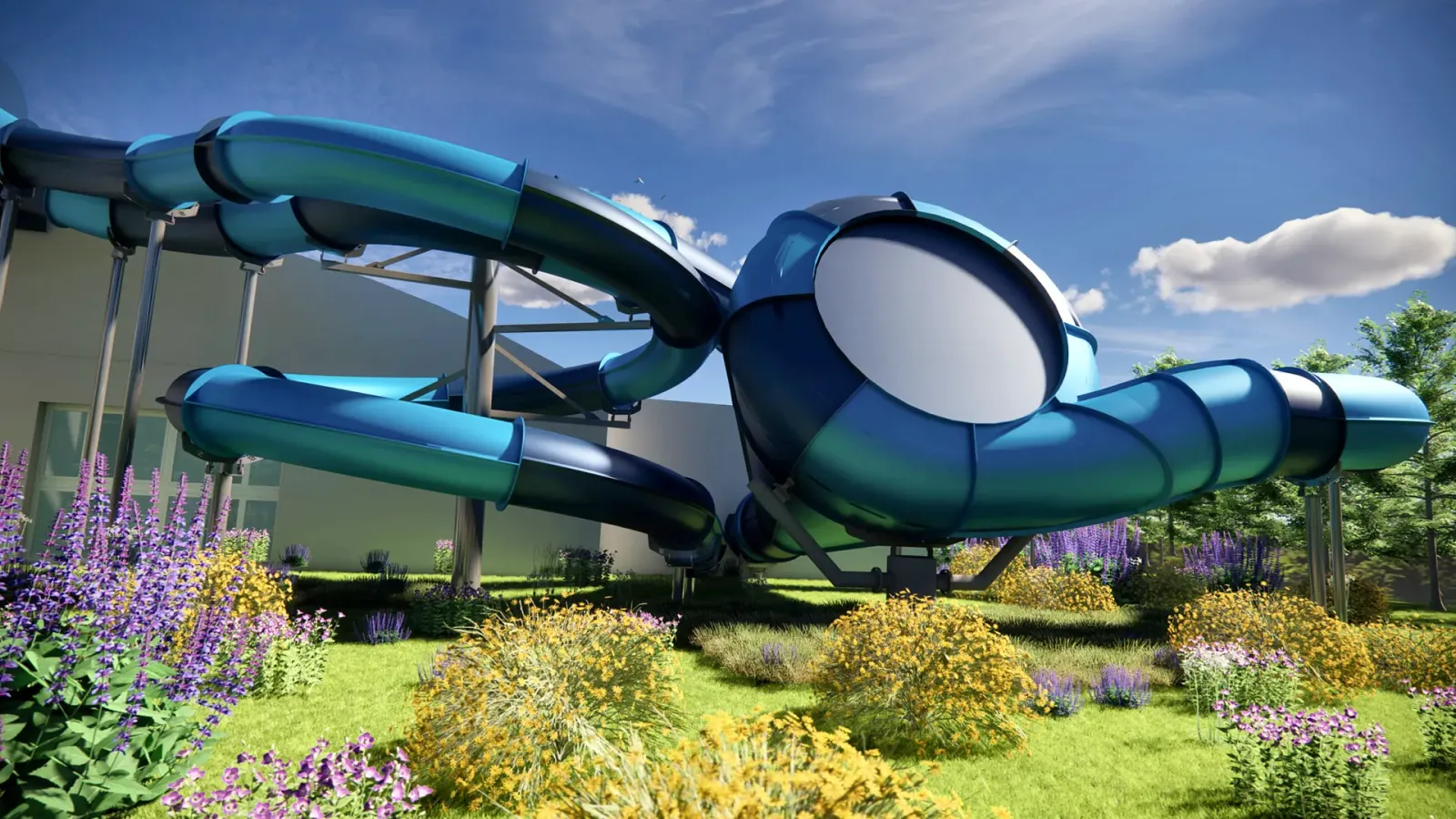
We translate the simulation results directly into the shape of the slide.
How to read a speed profile
Among other things, a simulation gives the speed at every position along the slide. In a bend where the slide is slightly flatter, speed decreases; on a steeper straight section it increases. In the final section the rider slows down.
The standards behind the design
We design our slides to the European standards for water slides and swimming pools. The most important are:
- NEN-EN 1069-1
- Water slides, safety requirements and test methods. This standard classifies slides into types based on factors such as gradient and speed, and sets requirements for the slide cross-section, the clear space around the rider, acceleration in bends, the stairs and start platform, the run-out and the landing. The standard also gives limit values for the rider’s acceleration and speed; we check every design against them.
- NEN-EN 1069-2
- Water slides, instructions. This sets out what information must accompany the slide: the signs at the stairs and the start, including the level of difficulty, permitted riding positions and user restrictions.
- NEN-EN 13451-1
- Swimming pool equipment, general safety requirements. Covering handrails, balustrades, openings in which fingers or heads could become trapped, and edges and protrusions, among other things.
- NEN-EN 15288-1
- Swimming pools, safety requirements for design. Relevant to the pool the slide ends in and to the pool surround and walkways around it.
- NEN 9200
- Metal suspension structures and fixings in swimming pools. Specifies which materials and which corrosion protection are permitted in which part of the pool hall, including for a slide’s support structure.
NEN-EN 17232 and NEN-EN 1176 apply to water playgrounds and splash pads. Read more on the How we work page.
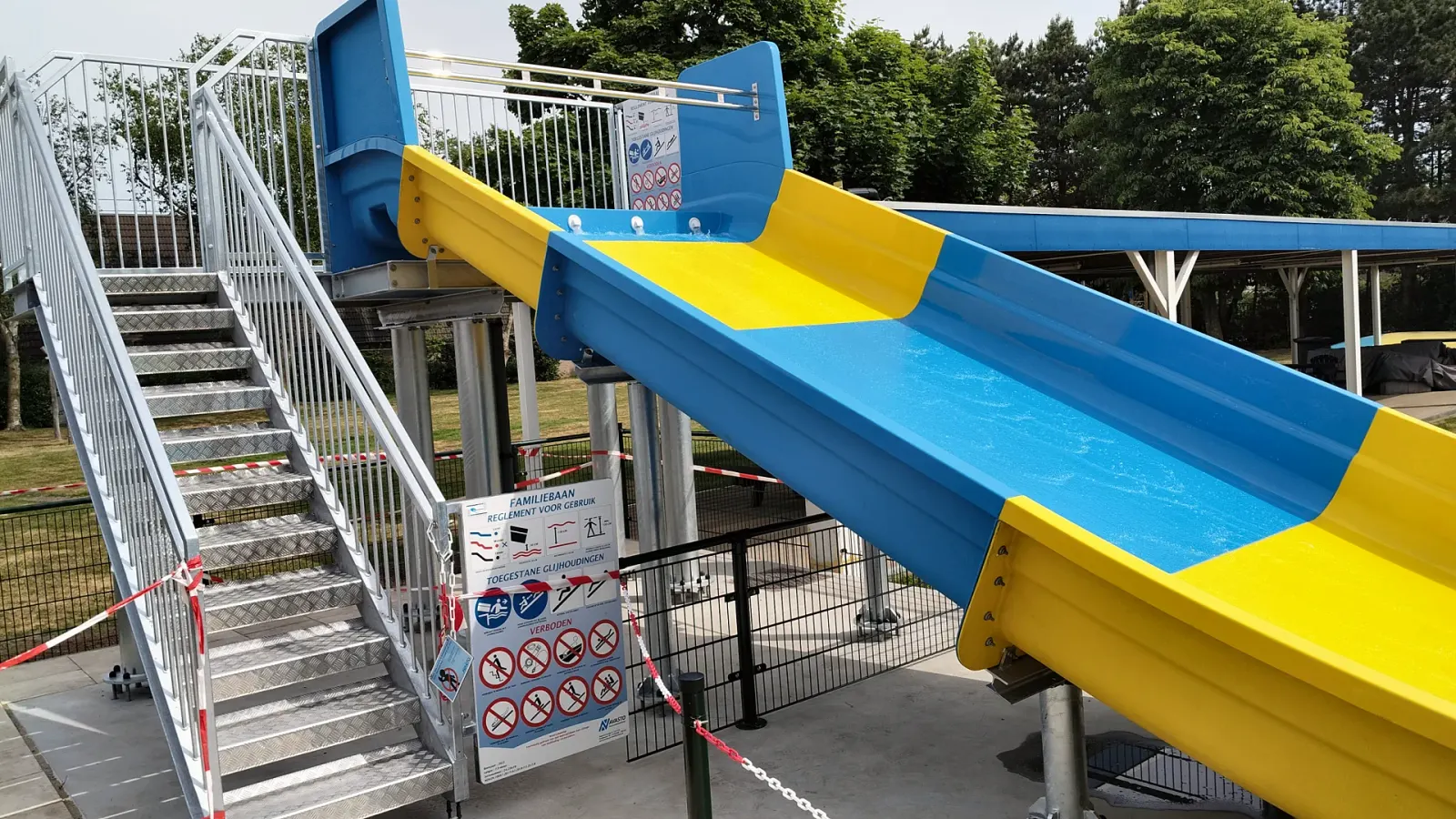
From simulation to inspection
A simulation is a prediction. That is why, after installation, we use test runs to check that the slide behaves as calculated before it goes into service.
The slide is then inspected by an independent inspection body. After inspection, the client receives a certificate showing that the attraction complies with the standards.
When renovating or extending an existing slide, we recalculate as well: a new bend or a different run-out changes the sliding behaviour of the entire slide.
Frequently asked questions
Why is a slide simulated?
Because every slide is custom-made. A simulation tells us before production how fast the rider travels, how high the acceleration in the bends is and how the landing goes. That way we adjust the design before anything is built.
Which standards does an AVASTO slide comply with?
We design our water slides to NEN-EN 1069-1 (safety requirements and test methods) and NEN-EN 1069-2 (instructions and signs). We also take into account NEN-EN 13451-1 for swimming pool equipment, NEN-EN 15288-1 for the pool and NEN 9200 for metal structures in the pool hall.
Is the slide inspected after handover?
Yes. After installation we check the slide with test runs. It is then inspected by an independent inspection body, and the client receives a certificate showing that the attraction complies with the standards.
Does an existing slide have to be recalculated after a modification?
A modification to the slide path itself, such as a new bend, a different run-out or a higher starting point, changes the sliding behaviour. We then recalculate the slide, so the modified slide complies with the standard again.
See also
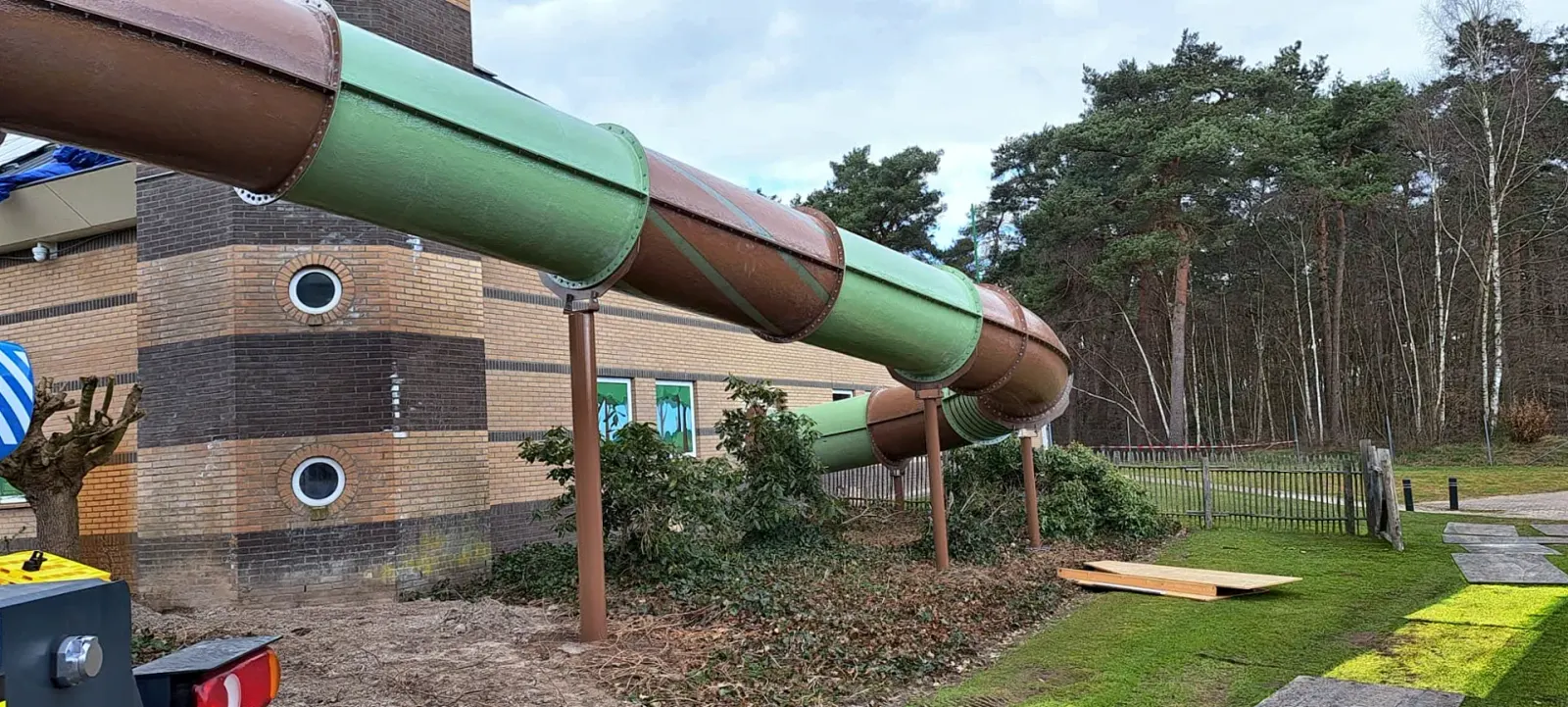 Water slideCustom designed
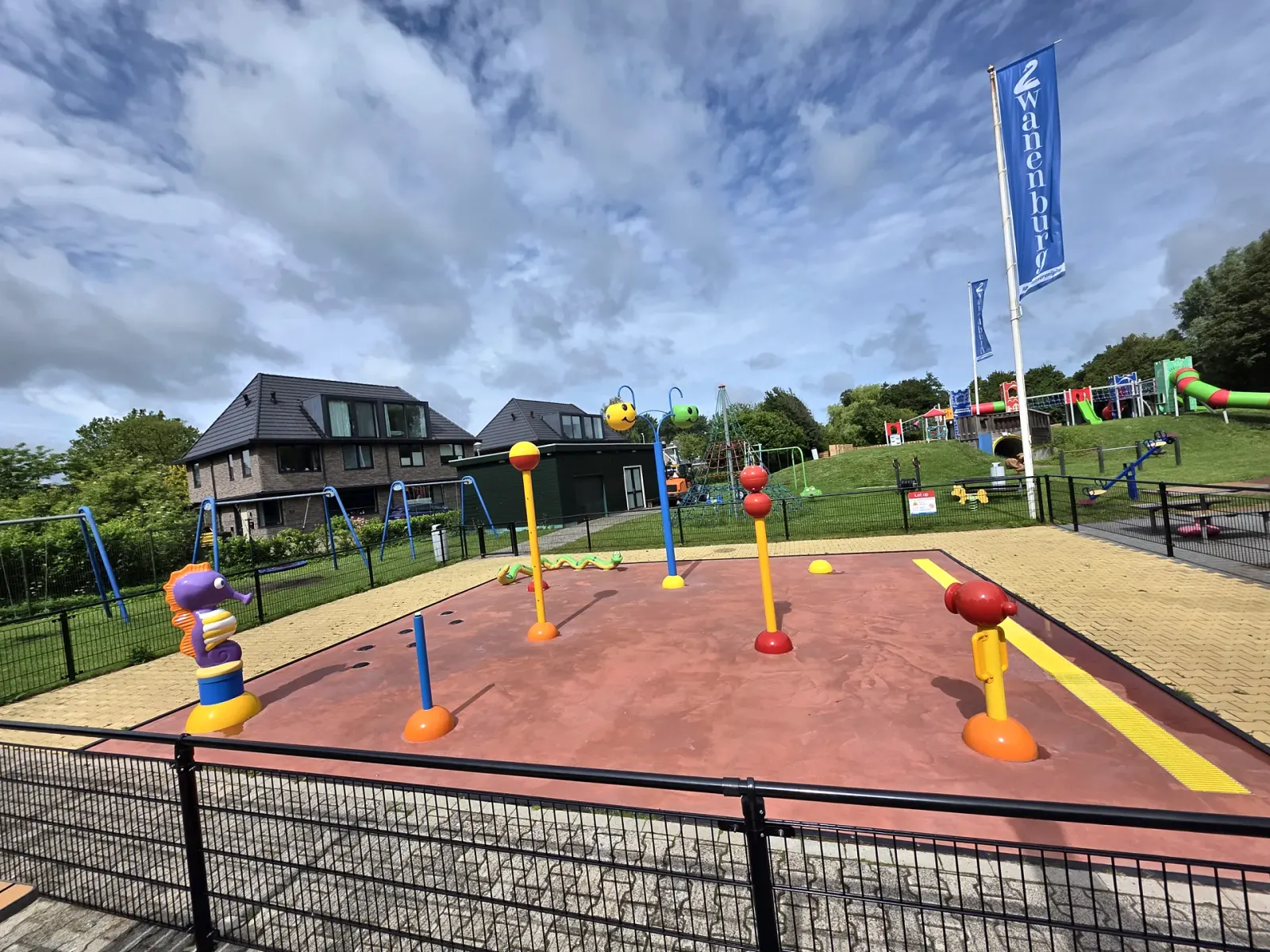 Splash padWater play without water depth
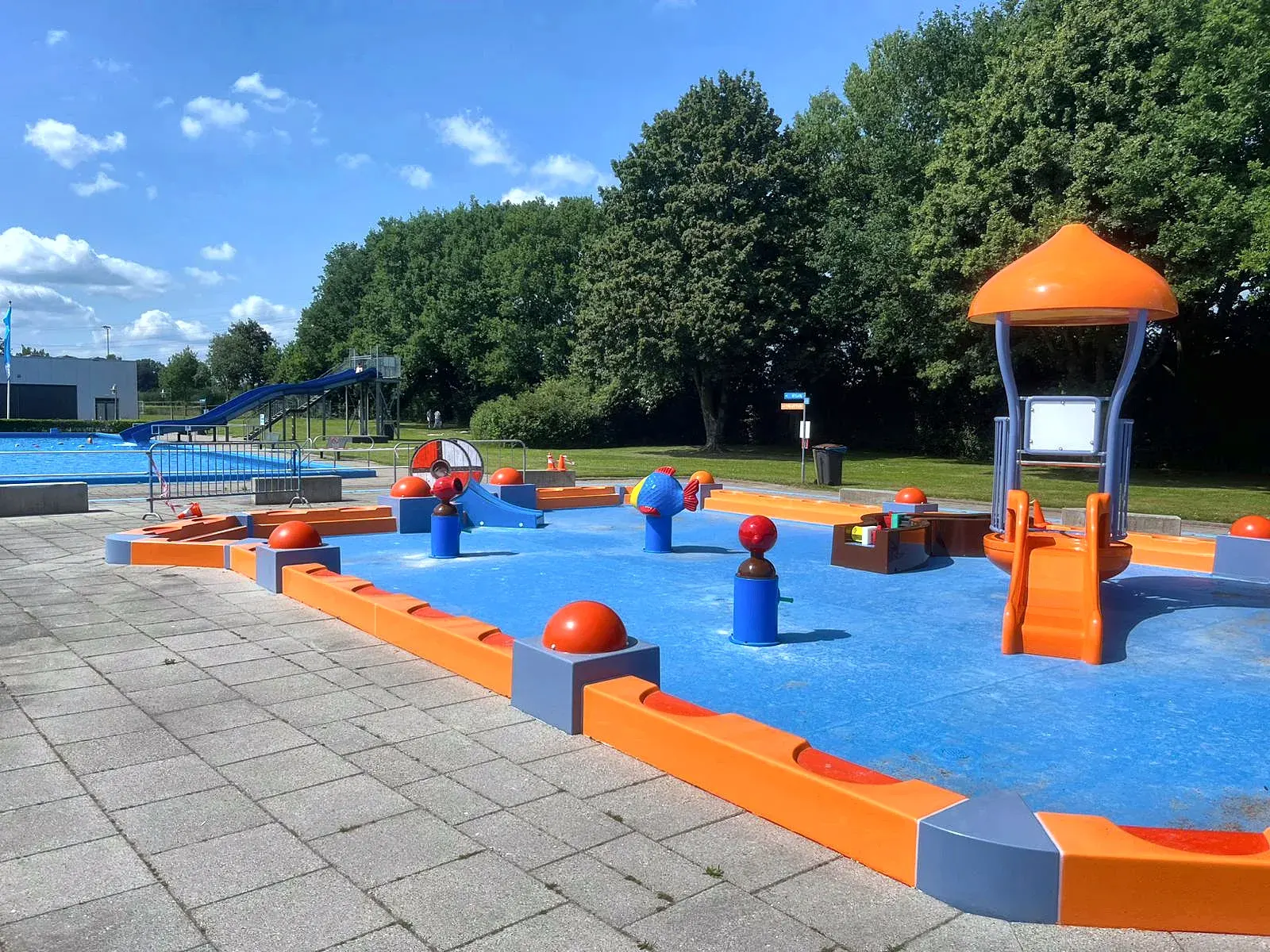 Water playgroundPlay equipment in the water
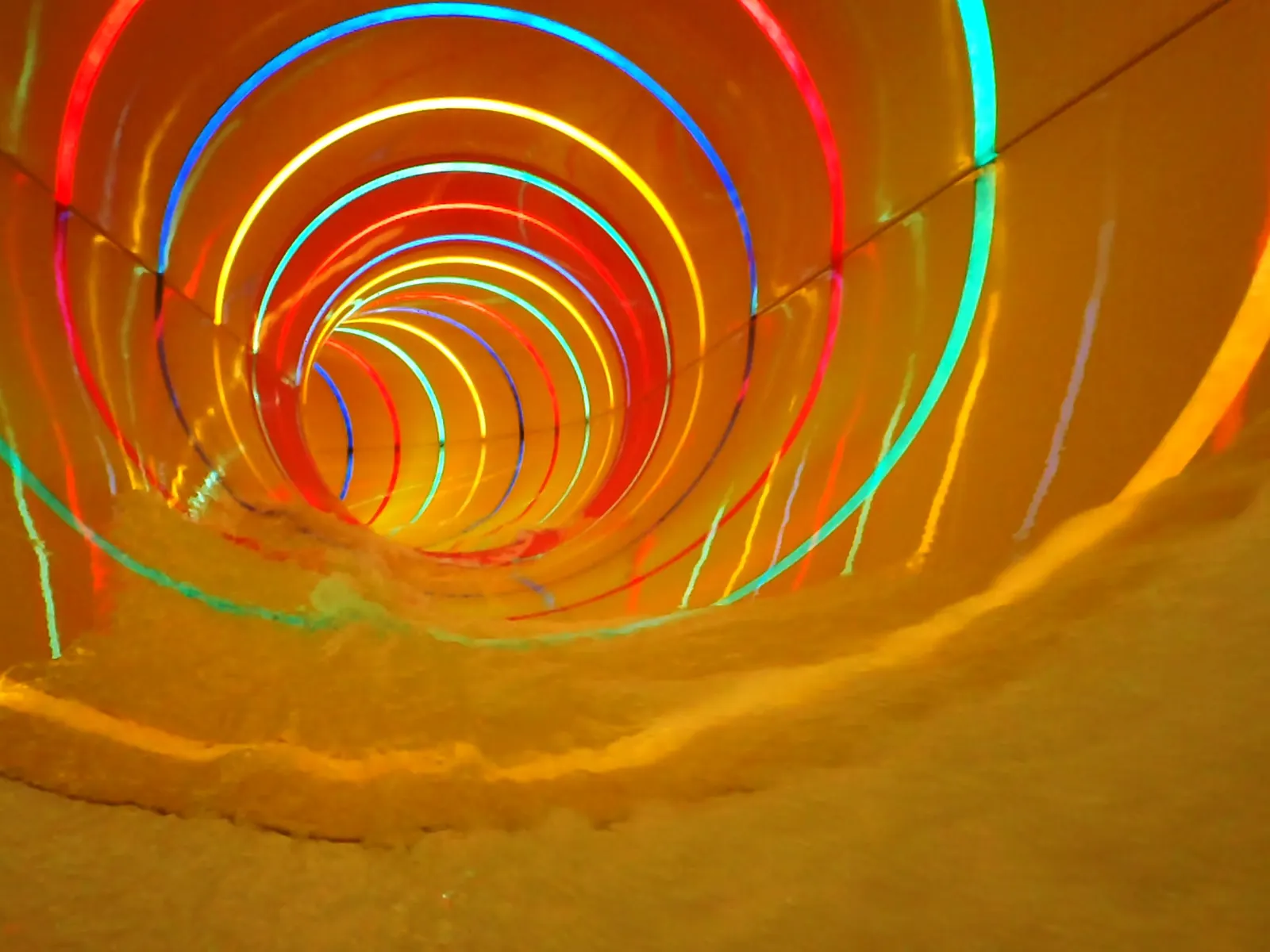 Slide electronicsLight, sound and timing
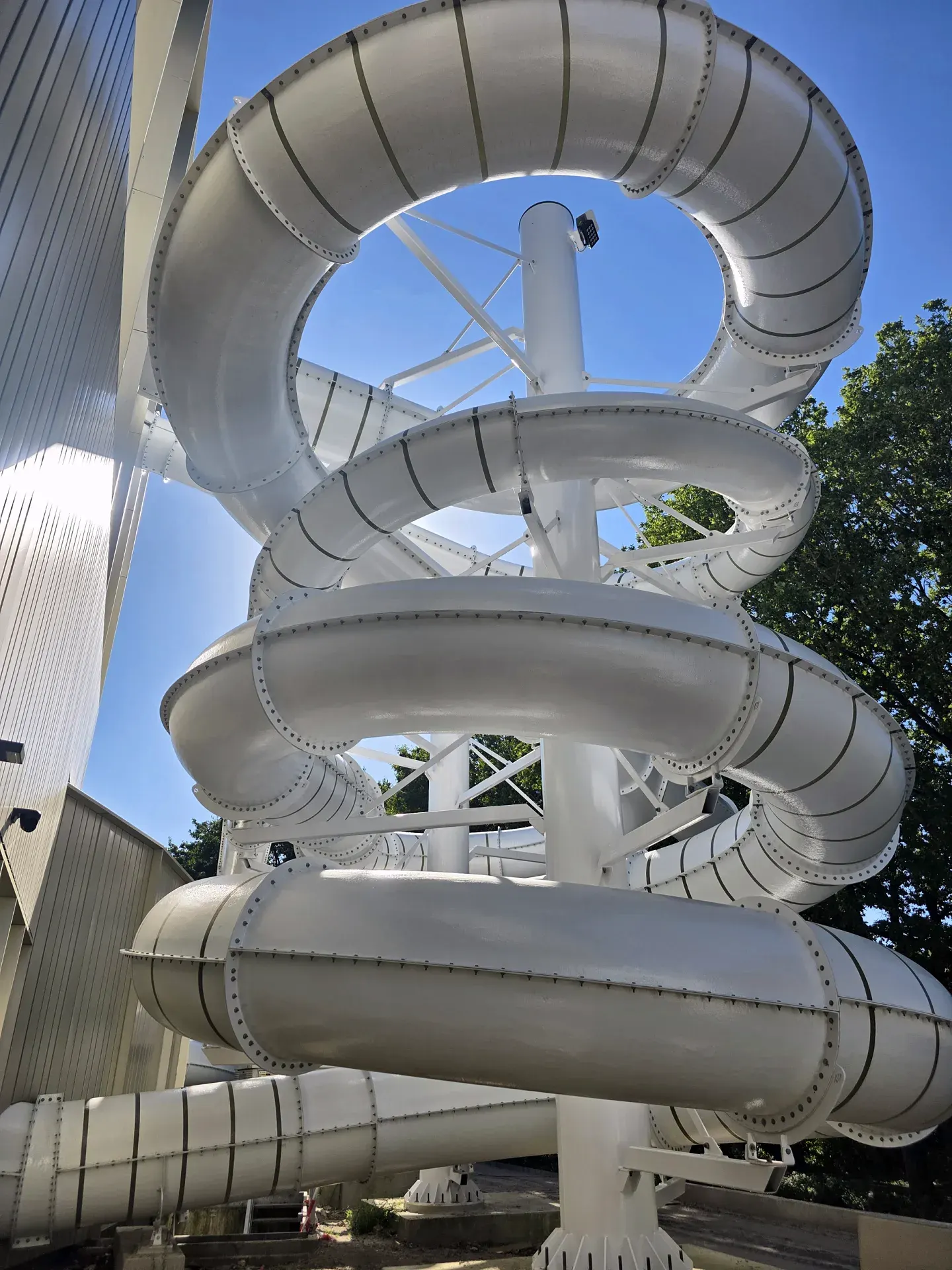 ProjectsSee what we have built
Want to know more about our approach? Take a look at our whirlpools and steam cabins, slide insulation, attractions, knowledge base, simulation and safety, how we work from design to inspection, or read the frequently asked questions.
Tell us what you have in mind
Whether you have an initial idea or a full set of requirements, we are happy to help you think it through. A first conversation is without obligation.
Send a photo or floor plan
Email us a photo, drawing or floor plan of your pool or site. We will look at what is possible and what we can recommend.
Email your photo or floor planArrange an introductory meeting
At your site or with us in Oudewater. We will discuss your wishes, the space and what is possible within your budget.
Call to make an appointmentVisit our workshop
See how your slide is made in our own production hall in Oudewater and meet the people who build it.
Directions to Oudewater