Why does a slide lose so much heat?
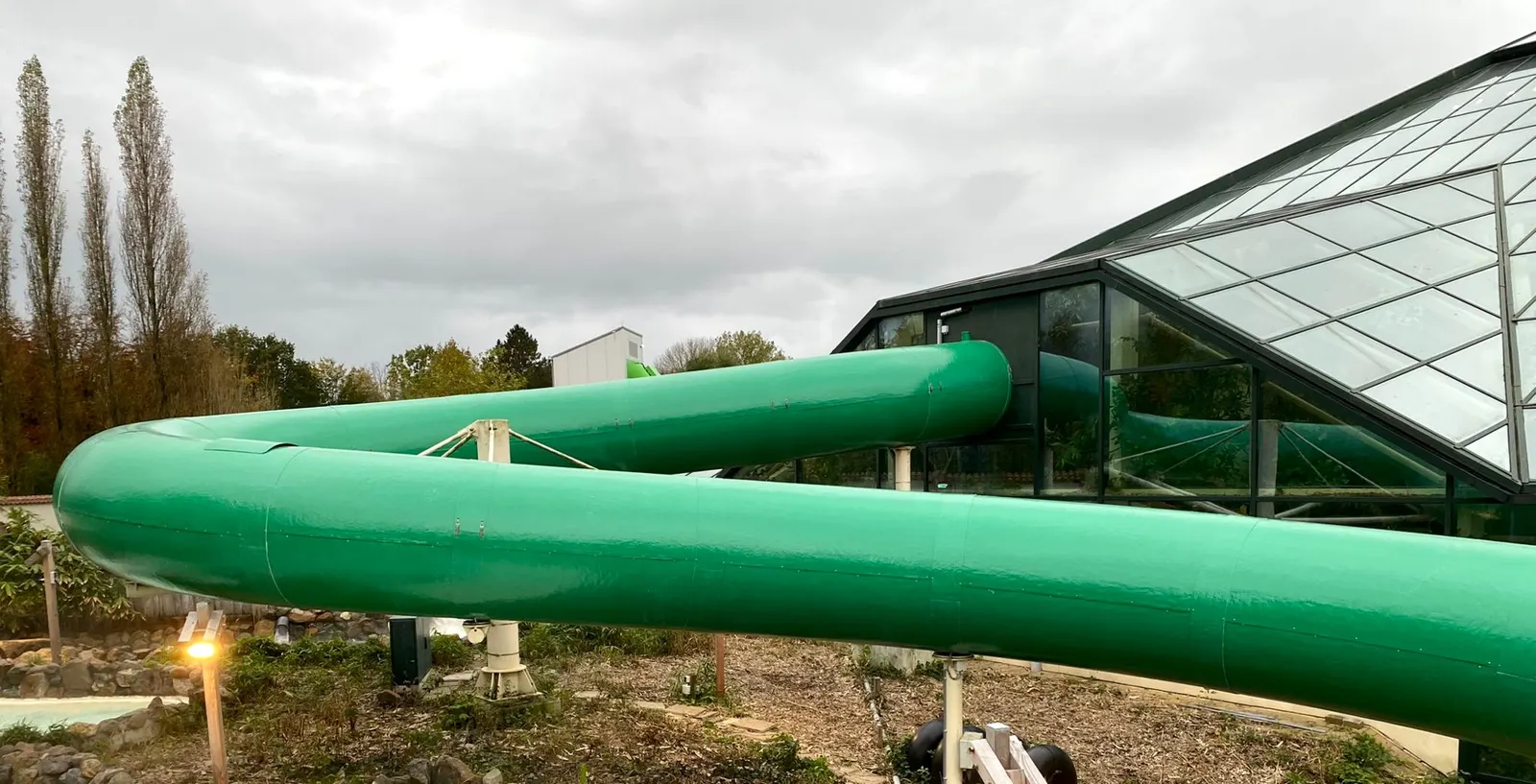
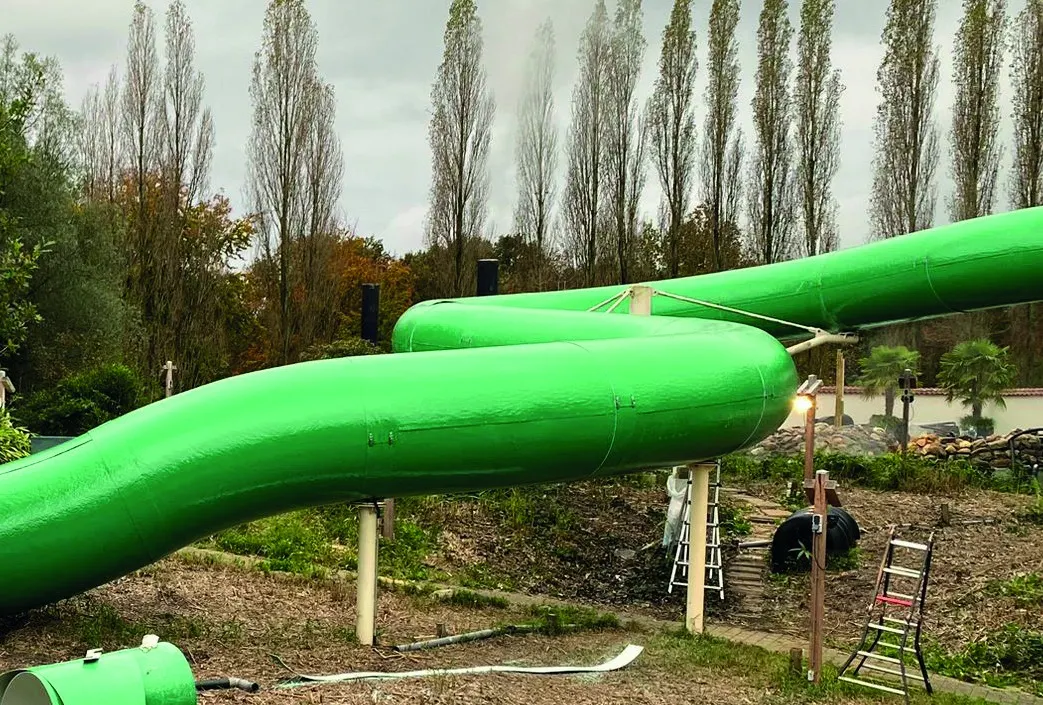
A slide is a long, thin tube with a large surface area through which warm water flows continuously. Across that entire surface, the water gives off heat to its surroundings. On top of that, water evaporates in the tube, which also costs heat and makes the air humid.
The air is at least as important. Warm, humid air from the pool hall flows through the tube constantly, drawn along by the water and the riders. An uninsulated tube therefore acts as one large heat exchanger: the air cools against the cold wall and returns cold to the hall. The air handling system then has to reheat that air. The greater the difference between inside and outside, the more energy this costs.
Which slides lose the most?
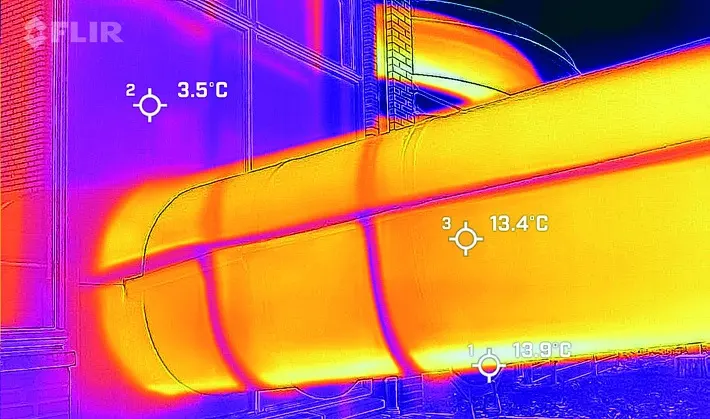
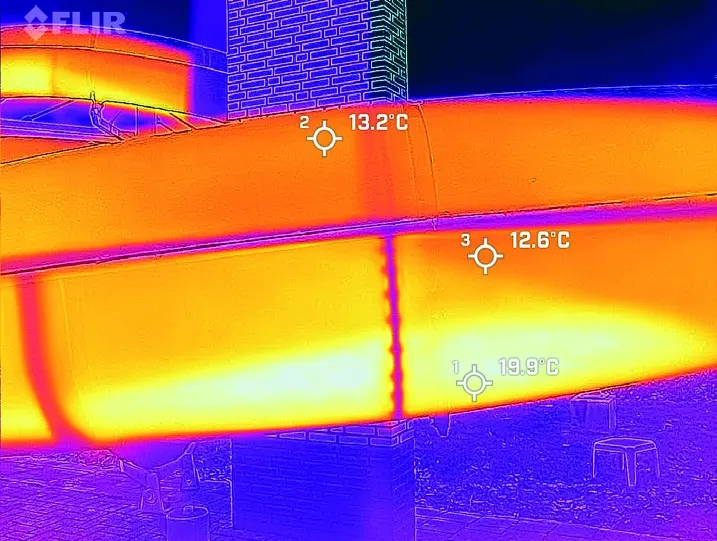
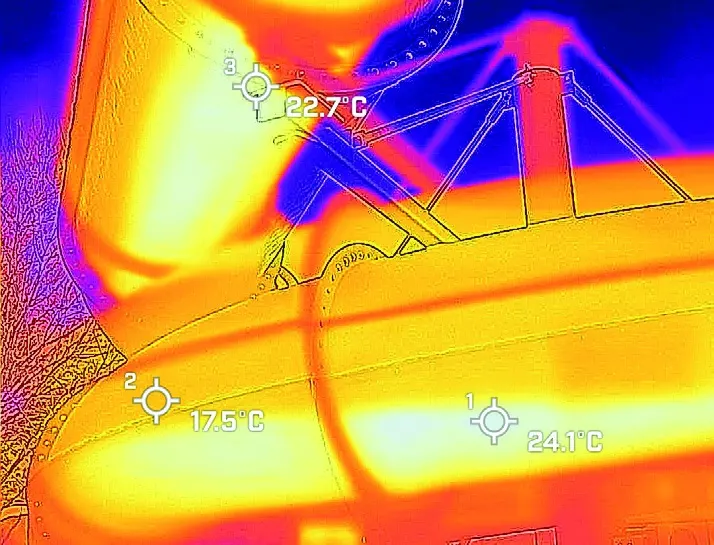
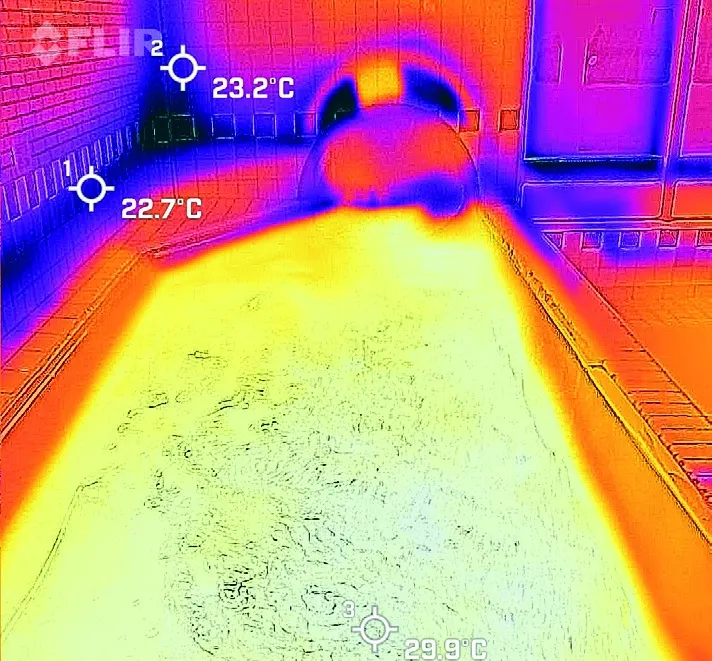
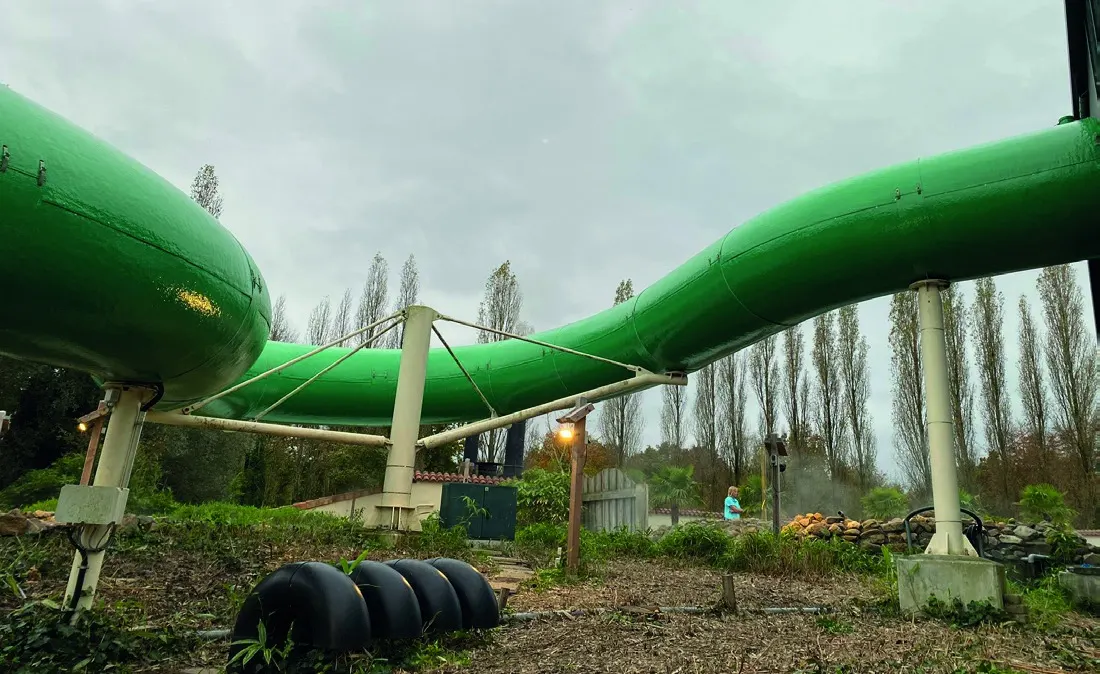
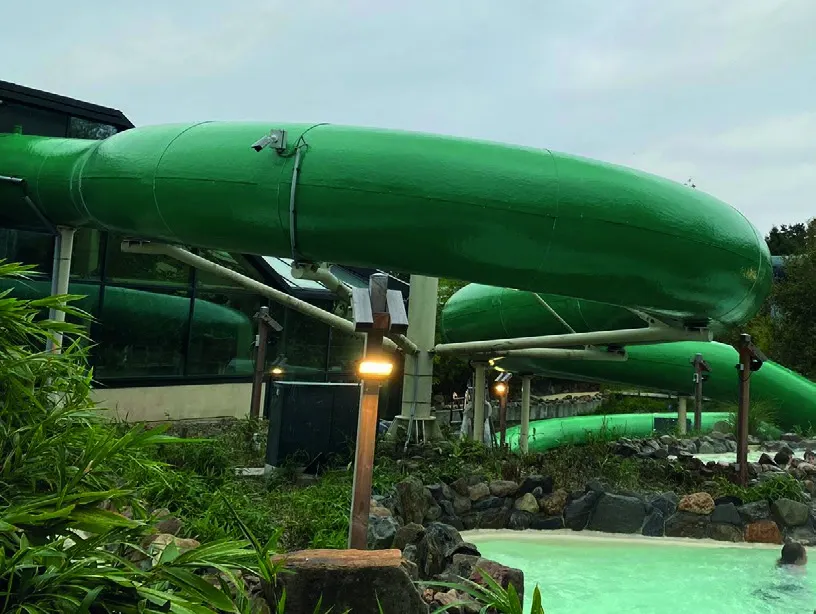
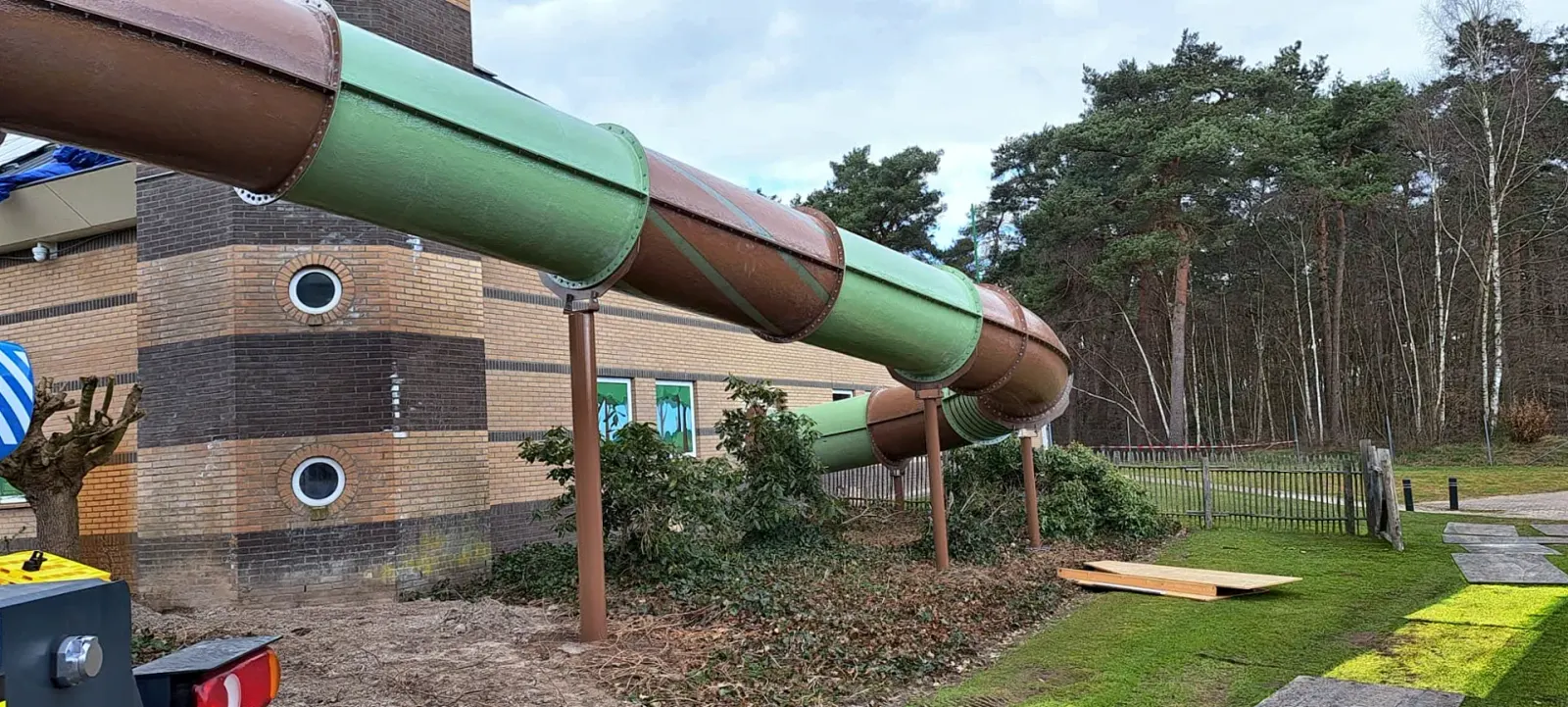
Above all, slides that run (partly) outdoors. In winter the difference with the outside air is large, and wind carries the heat away even faster. Long slides and slides that run many hours a day also lose more. Losses are often greatest at the joints and flanges between the sections, as the thermal images show.
What determines the savings?
The savings depend on the length and diameter of the slide, the section that runs outdoors, the water temperature, the capacity of the slide pump, the number of hours the slide is open and the insulation thickness. With those figures we calculate the heat loss before and after insulation, so you can estimate the savings and the payback period.
Insulate, renovate or replace?
If the slide is still in good condition, insulation is often the quickest way to save energy. If work on the slide is needed anyway, we combine insulation with renovation or extension. For a new slide, we include insulation in the design from the outset.