What is NEN-EN 1090?
NEN-EN 1090 is the European standard for the execution of load-bearing steel and aluminium structures. The standard consists of several parts. Part 1 (NEN-EN 1090-1) describes how a manufacturer demonstrates that its structural components comply, and is the basis for CE marking. Part 2 (NEN-EN 1090-2) contains the technical requirements for the execution of steel structures, such as welding, drilling, finishing and tolerances.
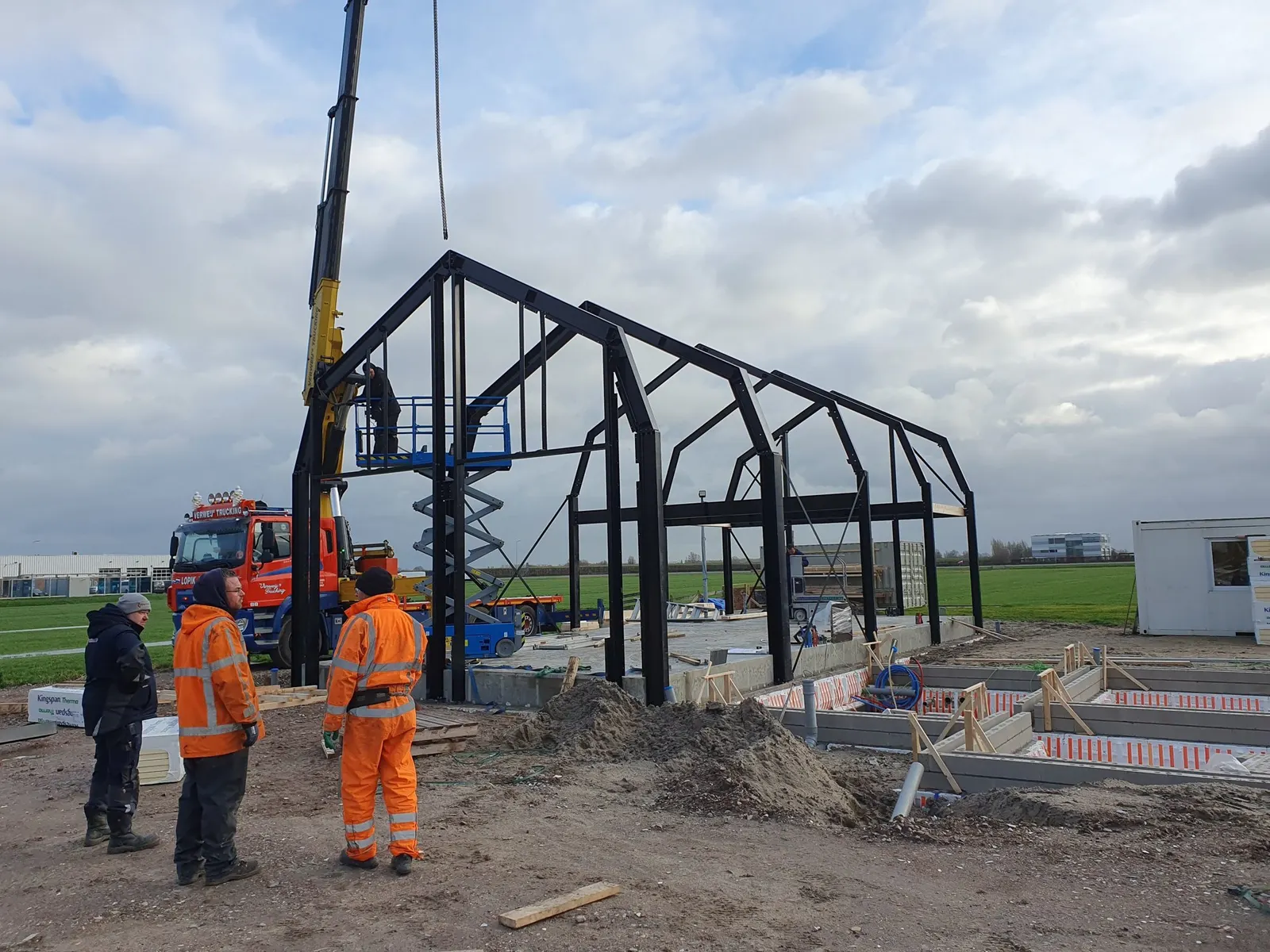
A structural component covered by the standard may only be placed on the market with CE marking and a declaration of performance. This is a legal requirement and applies, for example, to columns, beams, platforms, staircases, cage structures and the steel supporting structure of a slide tower.
What does certification involve?
Being certified means that an independent body has established that the manufacturer demonstrably controls its production. At AVASTO, that body is Kiwa. During audits, Kiwa assesses us on four key points:
- An FPC system (Factory Production Control): the manual that sets out how we work and carry out checks, from drawing to delivery;
- Qualified welding procedures: welding procedure specifications (WPS) backed by welding procedure qualification records (WPQR);
- Qualified welders: every welder holds a valid welder qualification for the work he does;
- A welding coordinator who is responsible for the welding aspects of production.
Our certificate covers structural steel components in execution classes EXC 1 and EXC 2, under system 2+ of the European Construction Products Regulation. We weld using the MAG process (135) in steel grades S235, S275 and S355, with a qualified welding procedure for material thicknesses from 3 to 40 mm. You can always check whether a certificate is valid on the Kiwa website.
In the years between audits, we must also actively maintain the system. Every year, we declare to Kiwa that nothing substantial has changed in our welding processes, materials, machines and welding coordination. If something has changed, a new audit follows.
Which execution class does my structure need?
NEN-EN 1090-2 has four execution classes, from EXC 1 (the lightest requirements) to EXC 4 (the most stringent). The structural engineer determines the class based on factors such as the consequences of failure, the use and the loads. Most buildings, platforms, staircases and installations fall into EXC 2. If the class is not stated on the drawing, we agree it with you in advance.
How do we work to the standard?
For every project with a load-bearing steel structure, we record what has been made and how. We do this in software developed specifically for NEN-EN 1090, so that nothing depends on loose pieces of paper.
- a welding plan and a checklist for each order, and CE marking with a declaration of performance on delivery;
- material certificates (3.1 certificates) for the steel and the welding consumables, so the origin of the material can be traced;
- the welding procedure specifications are kept at the welding stations in the workshop;
- our welding equipment is validated periodically and our measuring equipment is calibrated;
- anyone who visually inspects welds has a valid eye test;
- we assess our suppliers and request their own NEN-EN 1090 certificate from subcontractors who make structural components for us;
- we evaluate the system every year in a management review.
What are the benefits for you?
You get a structure that has demonstrably been made to the standard, with the documents required by building regulations. That avoids discussion at handover and gives certainty to your structural engineer, your client and the local authority. Because we handle design, production and installation in-house, responsibility stays with a single party.
The certification applies to our production facility in Oudewater. There, we make not only the steel structures of AVASTO Steel Construction, but also the steel towers, staircases and platforms of the water slides of AVASTO Recreation Technology.