VST, production line for sprinkler pipes
From pipe bundle to welded sprinkler pipe: an automated production line with a single control system from start to finish.
- Client
- Juffermans Machinebouw, for VST
- Production
- Oudewater
- Division
- Control Systems
- Specialism
- Industrial automation
What we did
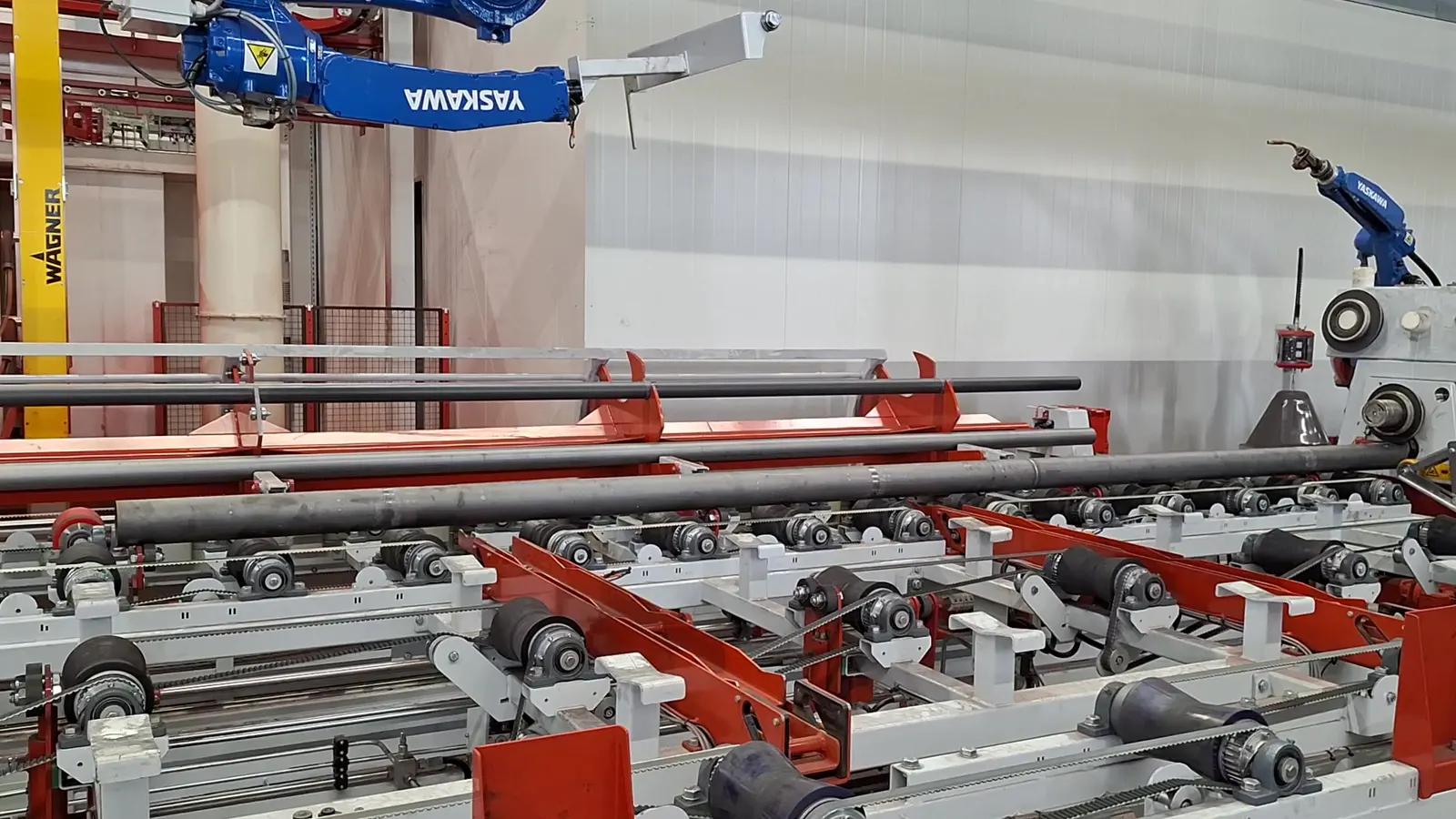
VST makes sprinkler pipes for fire protection. Juffermans Machinebouw built a new, automated production line for VST; commissioned by Juffermans, we built the complete controls: the control panels, the electrical schematics, the PLC software, the operator interface and the commissioning.
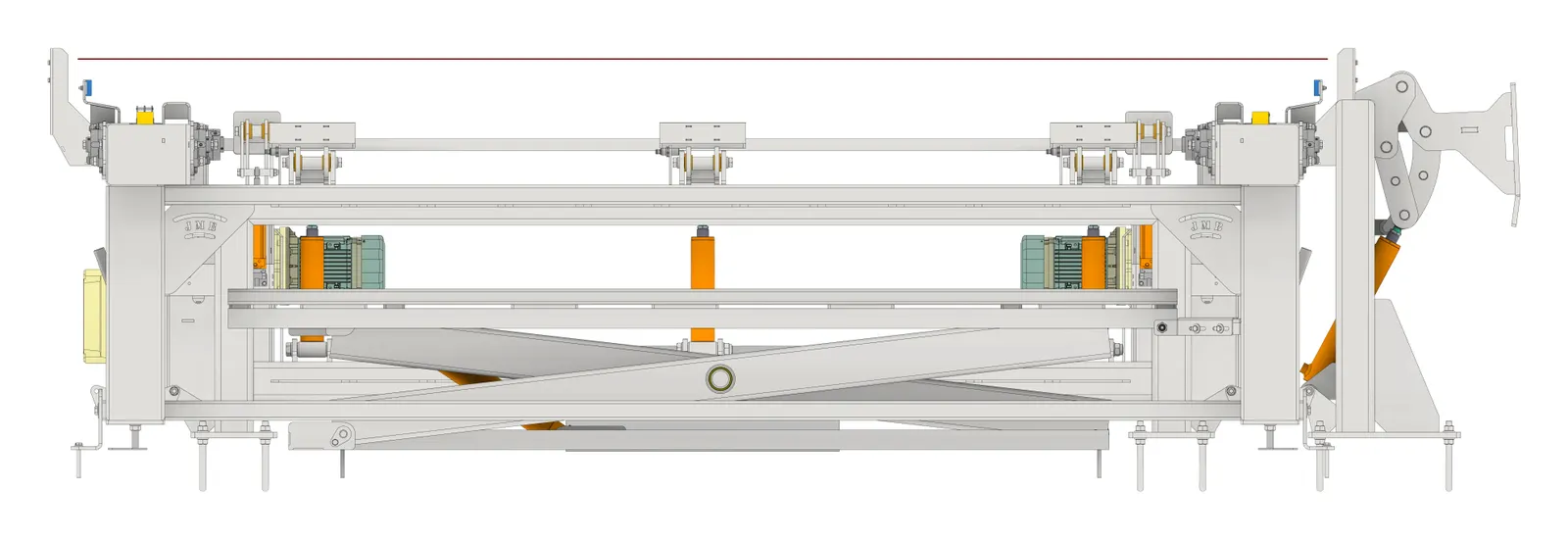
The line processes pipes from DN32 to DN100 with lengths of up to 7.2 metres. Pipes come from the bundle store, are milled, grooved and welded together, after which welding robots place the connections. The controls keep track of where every pipe is and what still needs to be done to it.
Since handover we have continued to extend the line, including with a database and production data export.
Our work on this project
- control panels with drives, IO and safety relays
- PLC software in CODESYS and operator interface in JMobile
- bundle store with bundle carts and a rotating magazine
- milling and grooving machines for different pipe sizes
- an endless weld and the link with two robotic welding cells
- order import, database and data export
What makes these controls special
A production line with dozens of pipes on the move at the same time demands more than a series of separate machines. The heart of the line is the cutting plan: from stock pipes and offcuts from earlier orders, the controls determine how the pipes are welded together and cut to length. We first wrote that logic in Python and tested it against real orders: for each step, which pipe is on the left and right, where it is cut and welded, and which offcut goes back into stock. We went through the results with VST.
Only once the simulation was right did we convert the code to CODESYS. To test order processing we generated test orders as XML with Python, and in the JMobile operator interface JavaScripts ensure, among other things, that each type of connection is linked to the right pipe. A simulation catches a lot, but not everything: we ironed out the last exceptions by running small orders with as much variation as possible in production.
- Cutting plan in Python
- The cutting plan was first built as a Python simulation and tested against real orders, including offcuts and weld seams, and then converted to CODESYS.
- Tracking pipes
- Our own tracking keeps tabs on around fifty pipes at once: where they are, what size they are and which operation is still needed.
- CANopen and Wago
- The IO is distributed along the line on a CANopen network with Wago modules. By increasing the bus speed, we kept the network load low.
- Electronic gearing
- The line's height adjustment runs via electronic gearing of the drives, so that all support points move exactly in step.
- Welding and robots
- The controls drive the endless weld and the Fronius welding units, and exchange data with two Yaskawa robotic welding cells.
- Orders and data
- Orders come in as XML and are handled with kanban. Production data goes to an SQL database for reporting; an OPC UA server keeps the systems in sync.
- Recipes and operation
- Recipes per pipe size, alarm pages, user rights and a Dutch-language operator interface in JMobile on Exor panels.
- Safety and remote access
- A safety PLC with Euchner door locks and fencing per zone, and remote maintenance via eWON.
From order to pipe, without retyping
Behind the machines is an operator interface that organises the whole production. Dozens of screens, clearly arranged for the operator: orders, stock, production and diagnostics.
- Orders. Orders arrive as a file from the order system and appear on a kanban board: from backlog to to do to in production. The operator can change the sequence and details; the line works through the queue by itself.
- Connections as recipes. Each type of connection, such as a socket or a weld, is stored as a recipe and can be linked to the right pipe for each order. VST adds new types itself.
- Stock at a glance. The stock of pipes in the rotating magazine and on the bundle carts can be tracked, replenished and emptied per size.
- Every pipe traceable. A product tracker shows which pipe is where in the line, which operation comes next and which products are finished.
- Flexible production. Process steps can be switched on or off per order, for example passing pipes through without welding.
- Faults and diagnostics. Alarm list with history, diagnostics for the frequency inverters and separate screens for communication with the robots. Changes are recorded in an audit table.
The result: orders go straight from the office to the line, the operator does not have to retype anything and every pipe can be traced afterwards.
Project photos
Click a photo to view it full size.
The line in operation (video) The endless weld (video) Welding robot above the line (video) 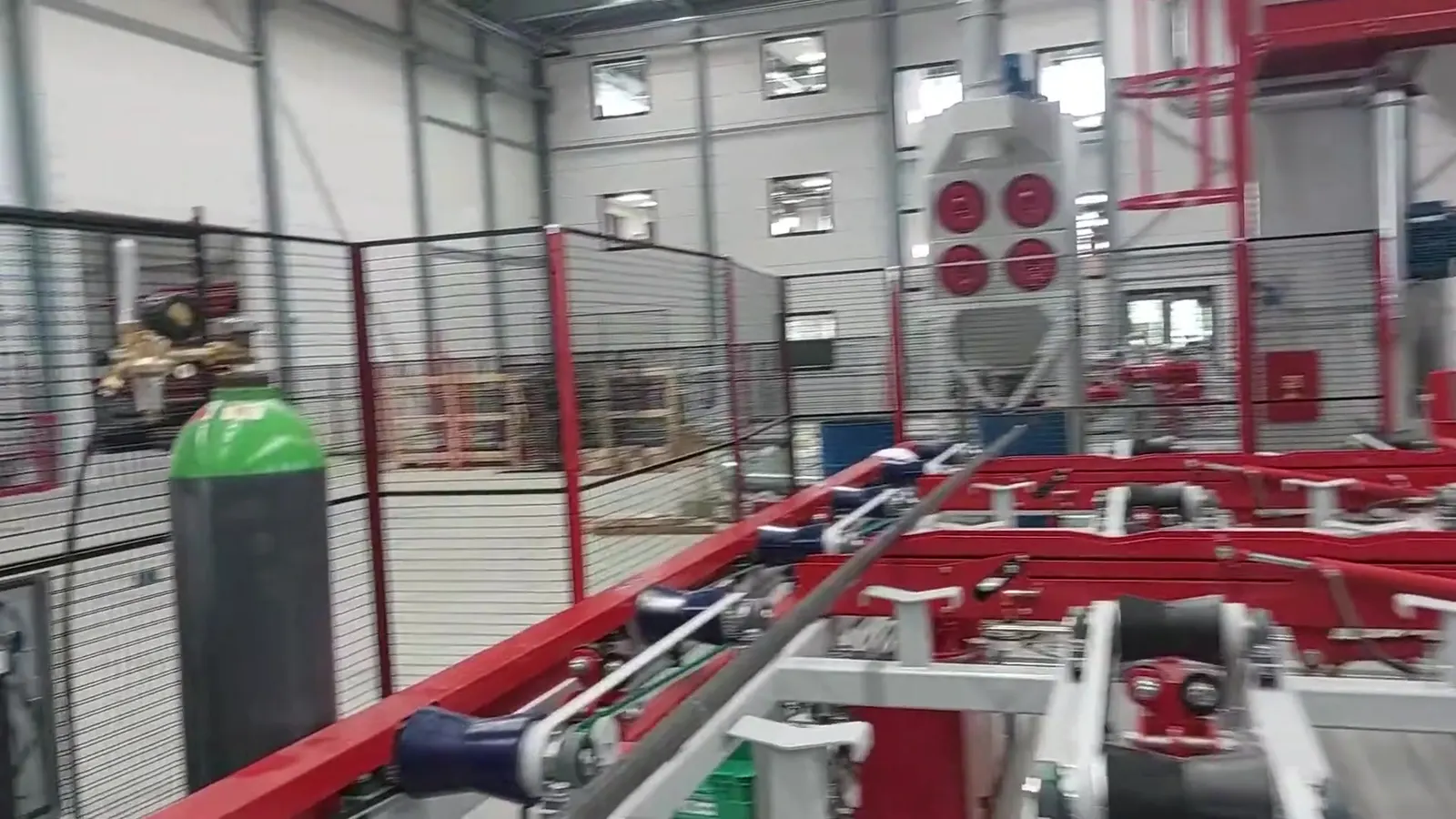
Roller conveyors to the blasting booth, behind the fencing 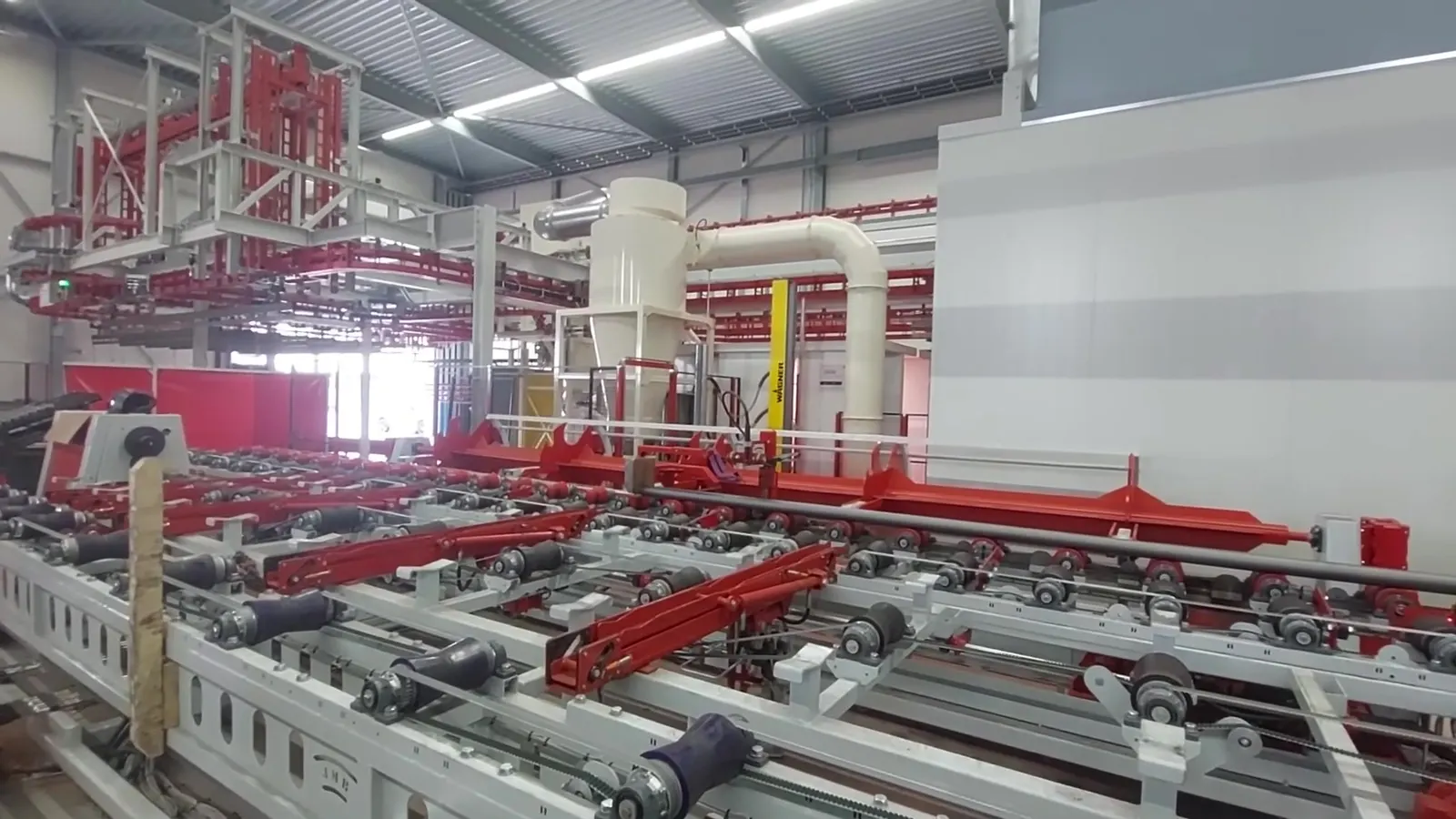
Roller conveyors and cross transfer for the pipes 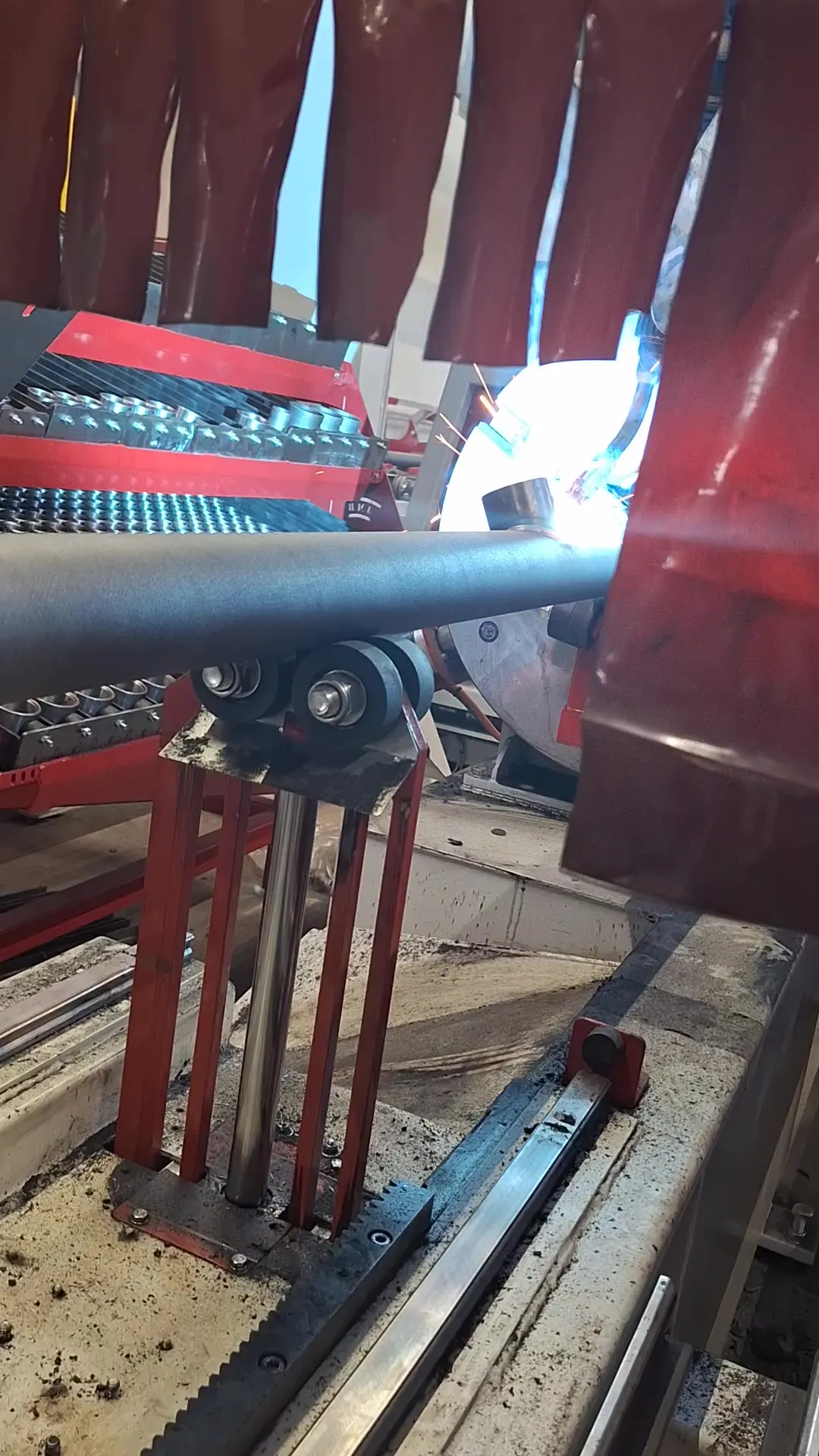
Welding the pipe at the endless weld 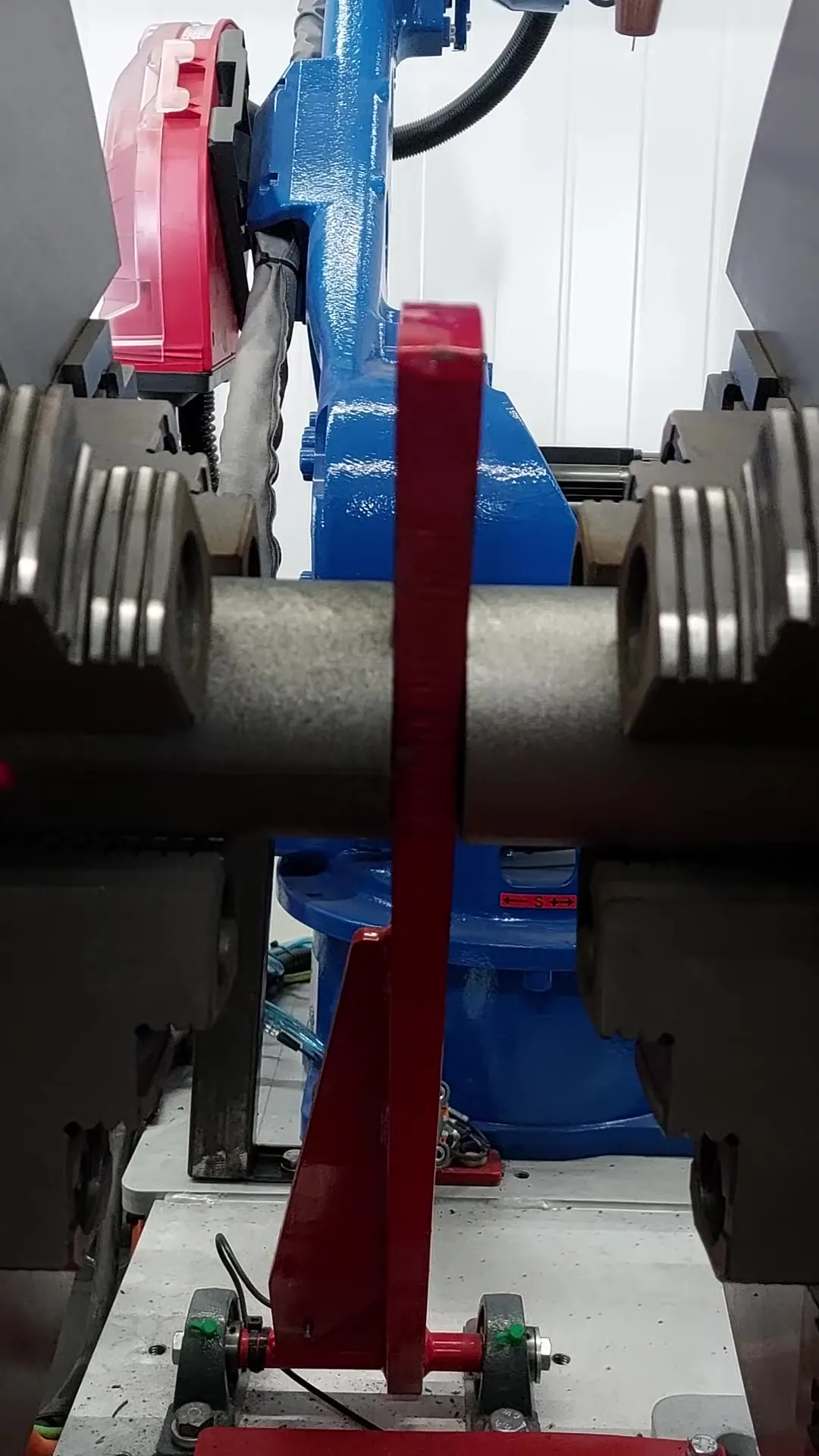
Pipe clamped for machining 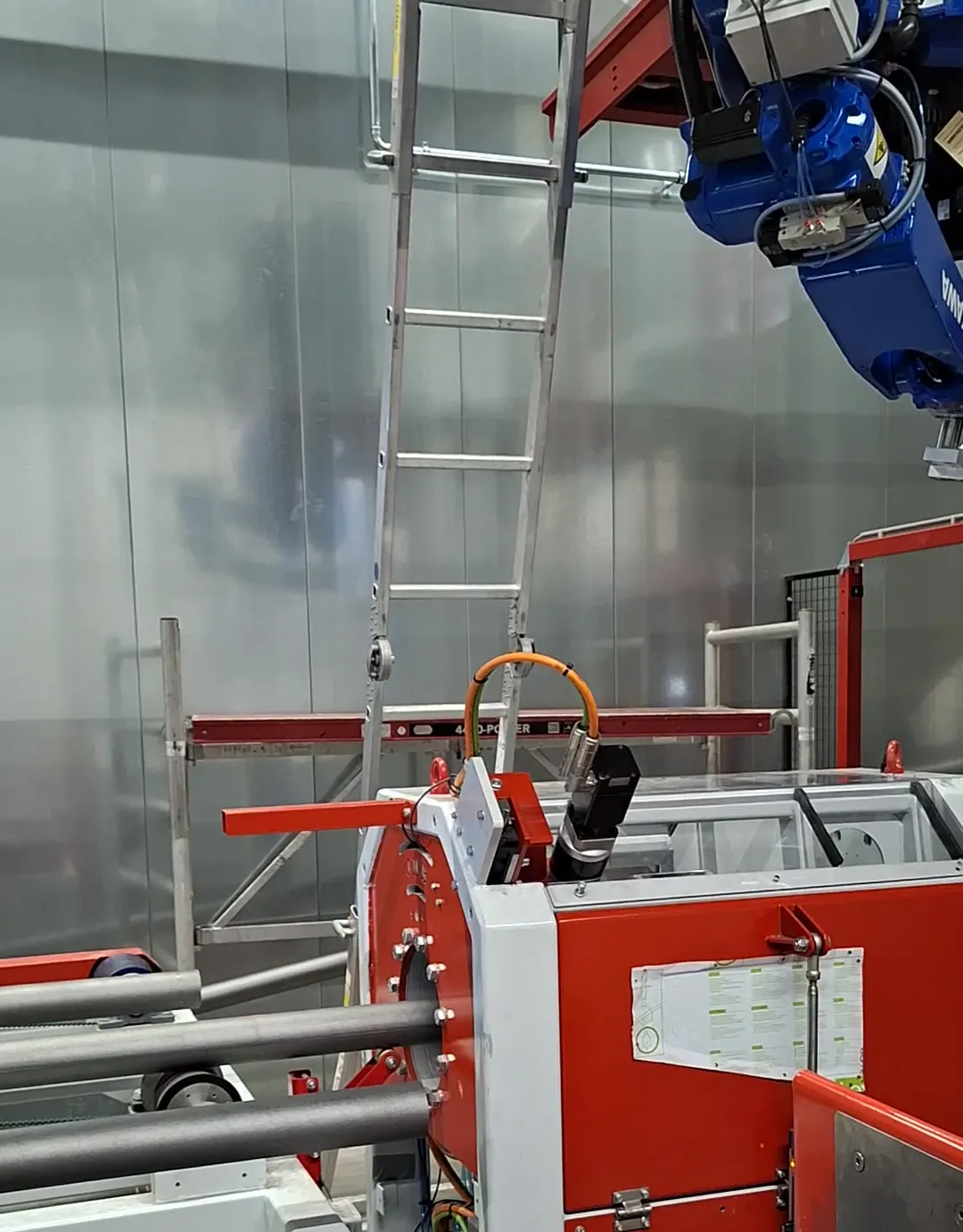
Robot above one of the machining stations 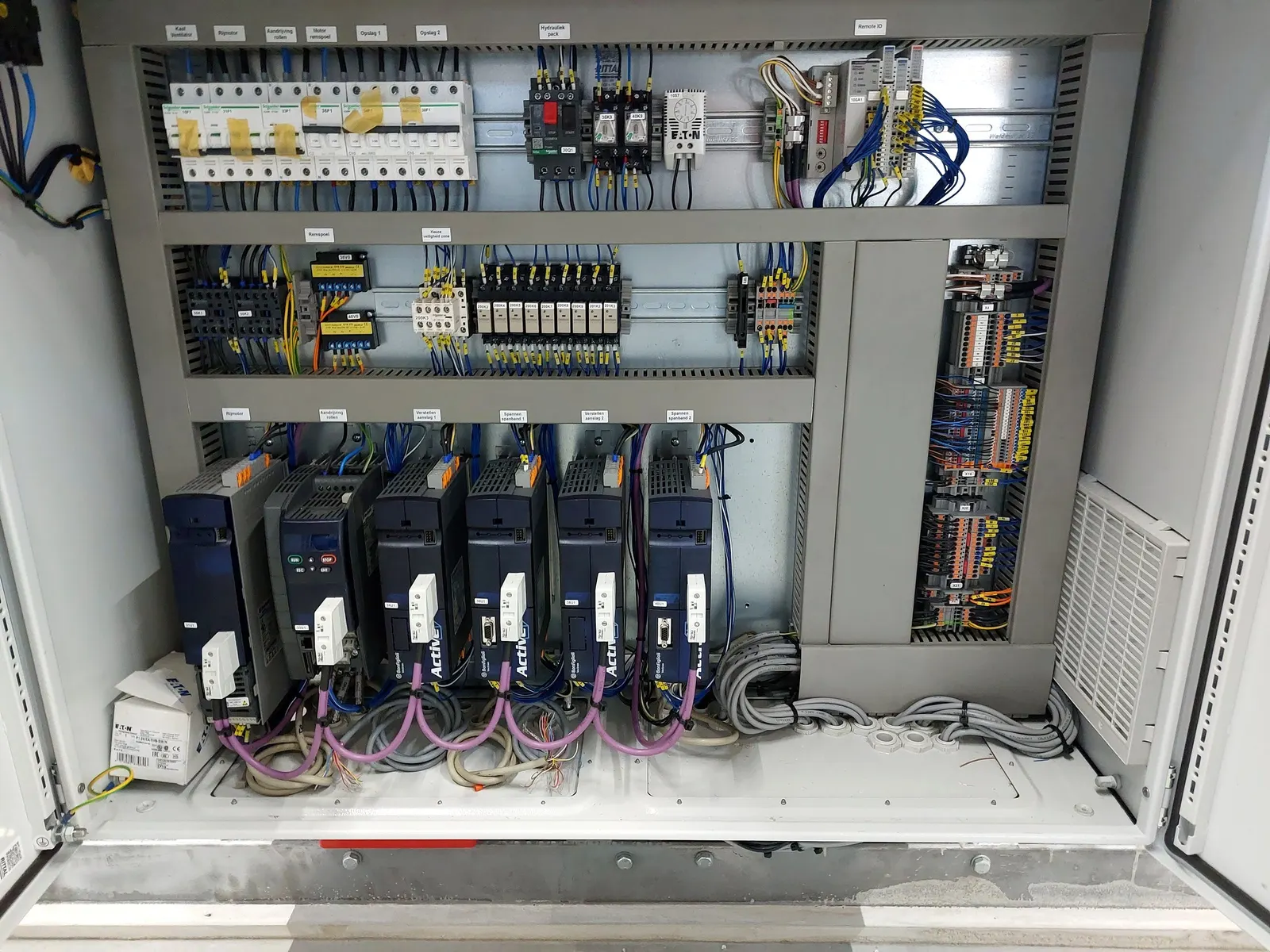
Control panel with a row of drives 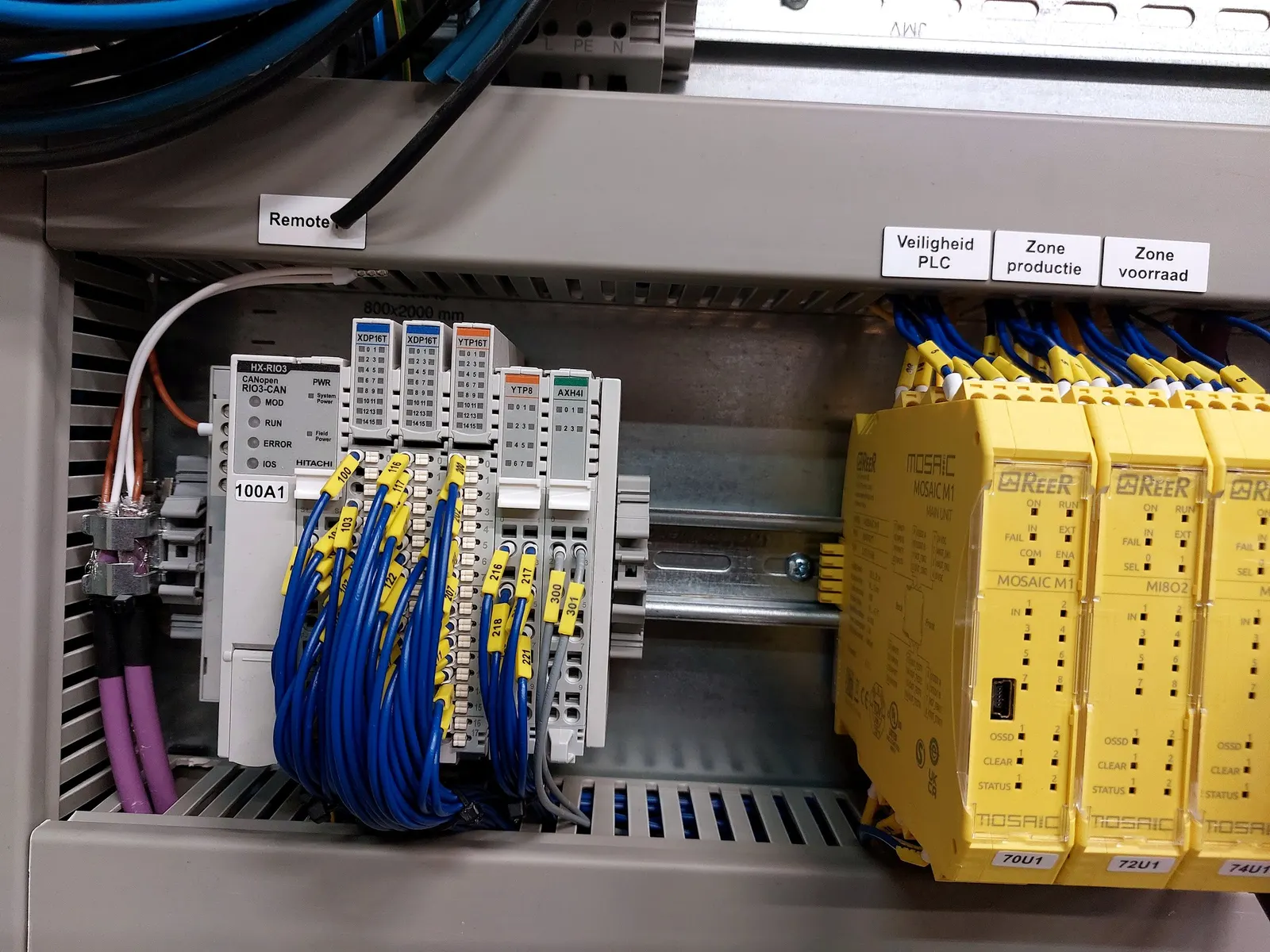
IO modules, Profinet and safety relays per zone 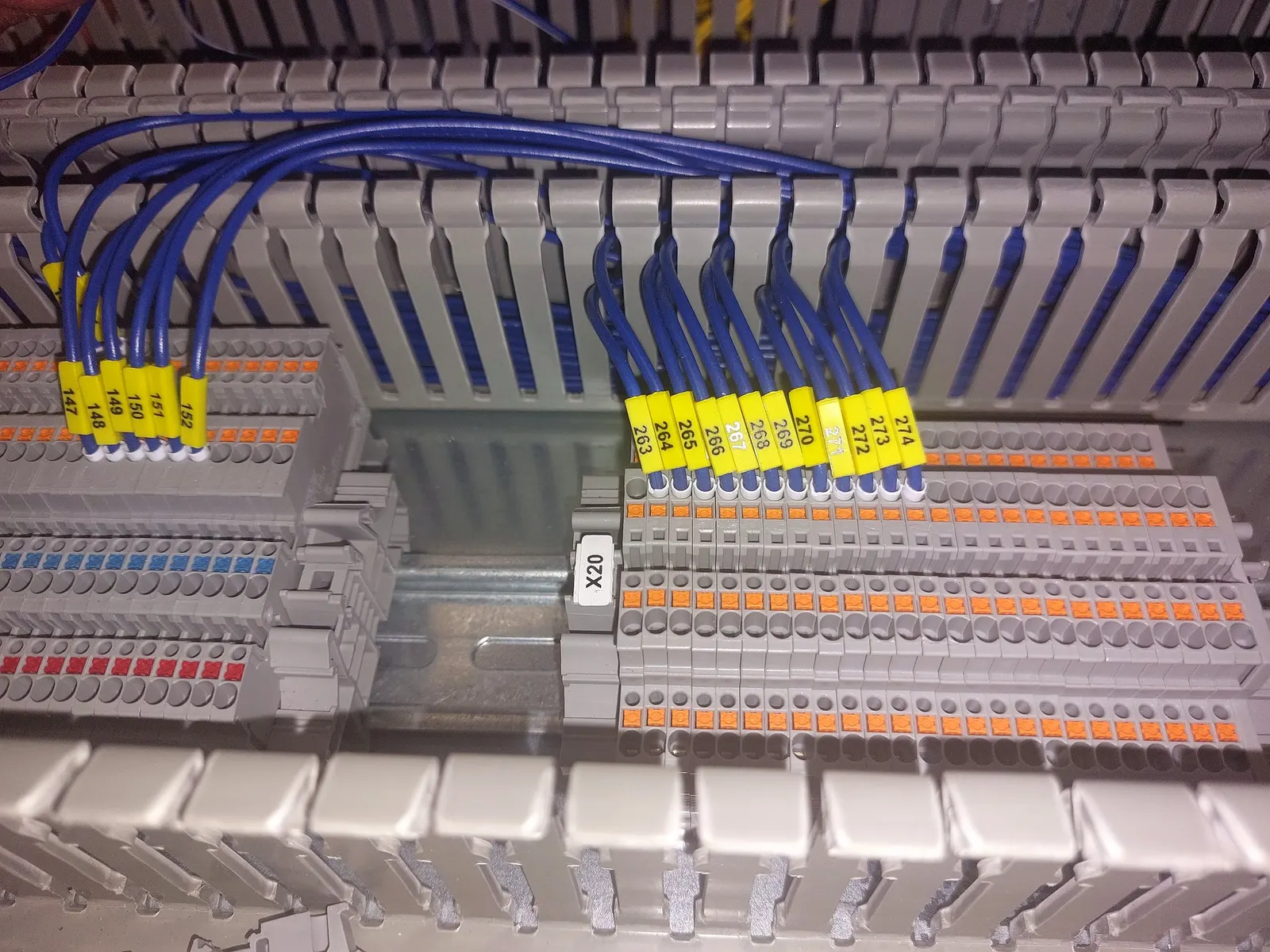
Terminal strips with labelled wiring 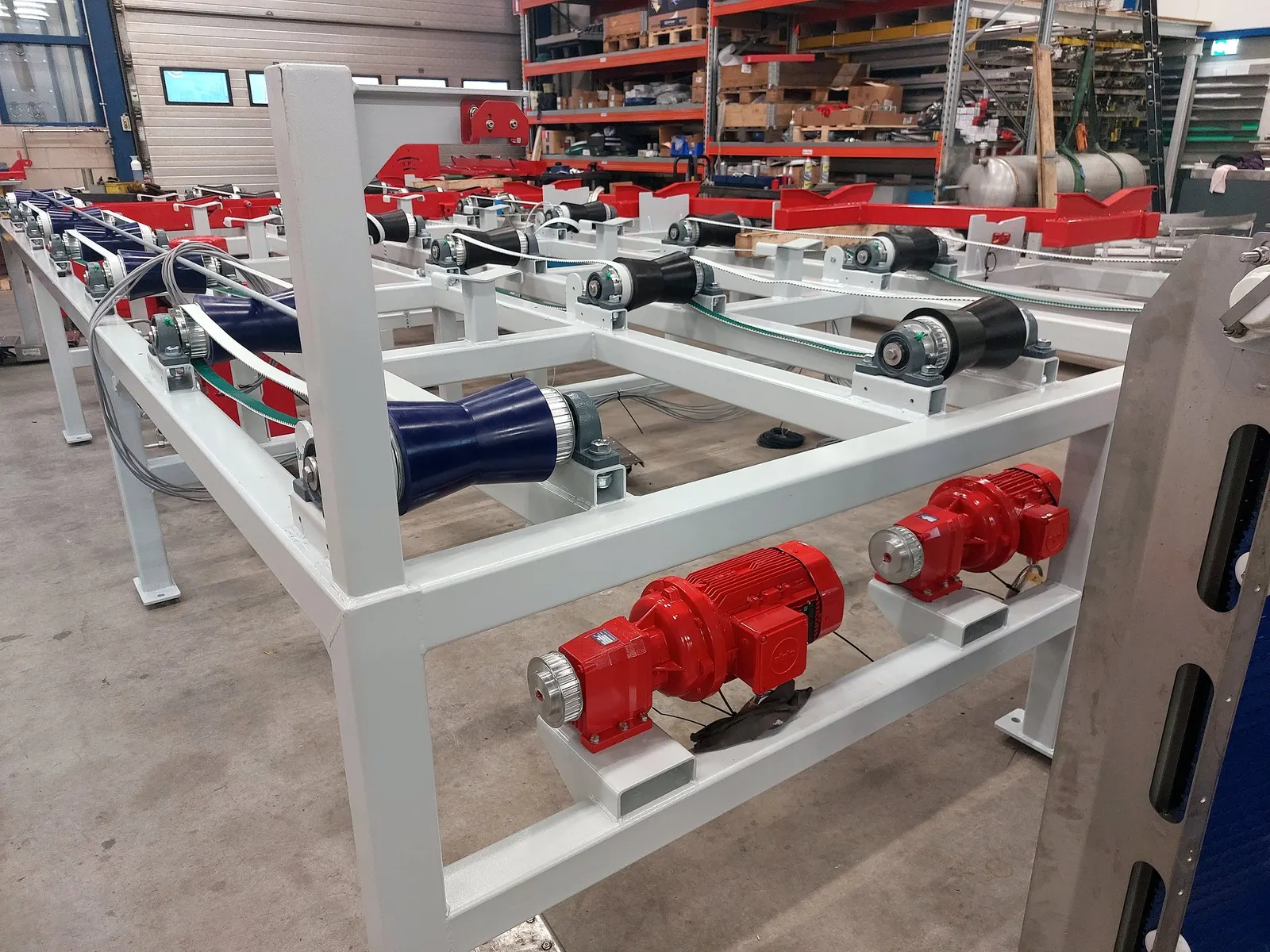
Conveyor frames with motors for the pipes 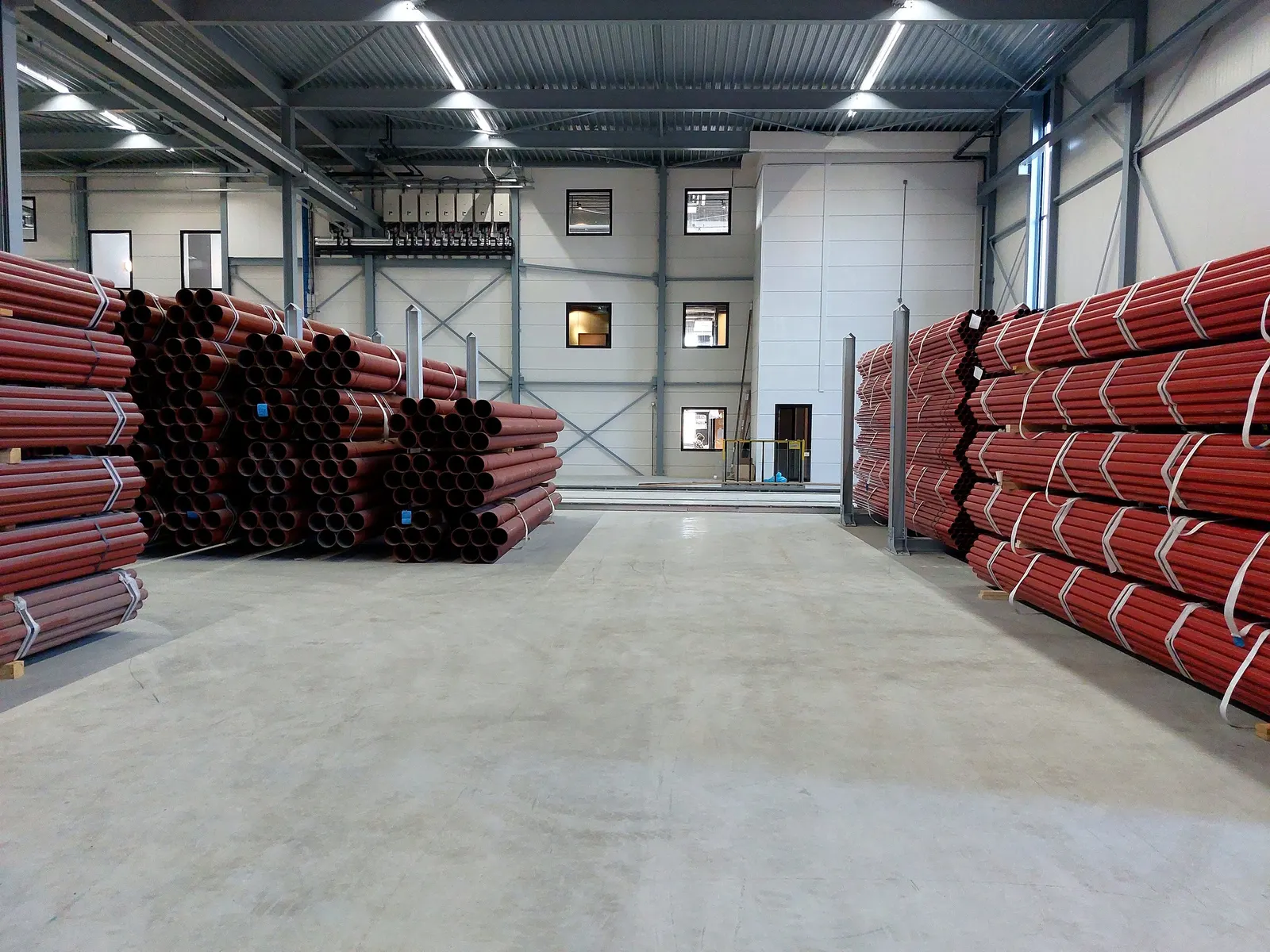
Bundles of sprinkler pipes in the bundle store 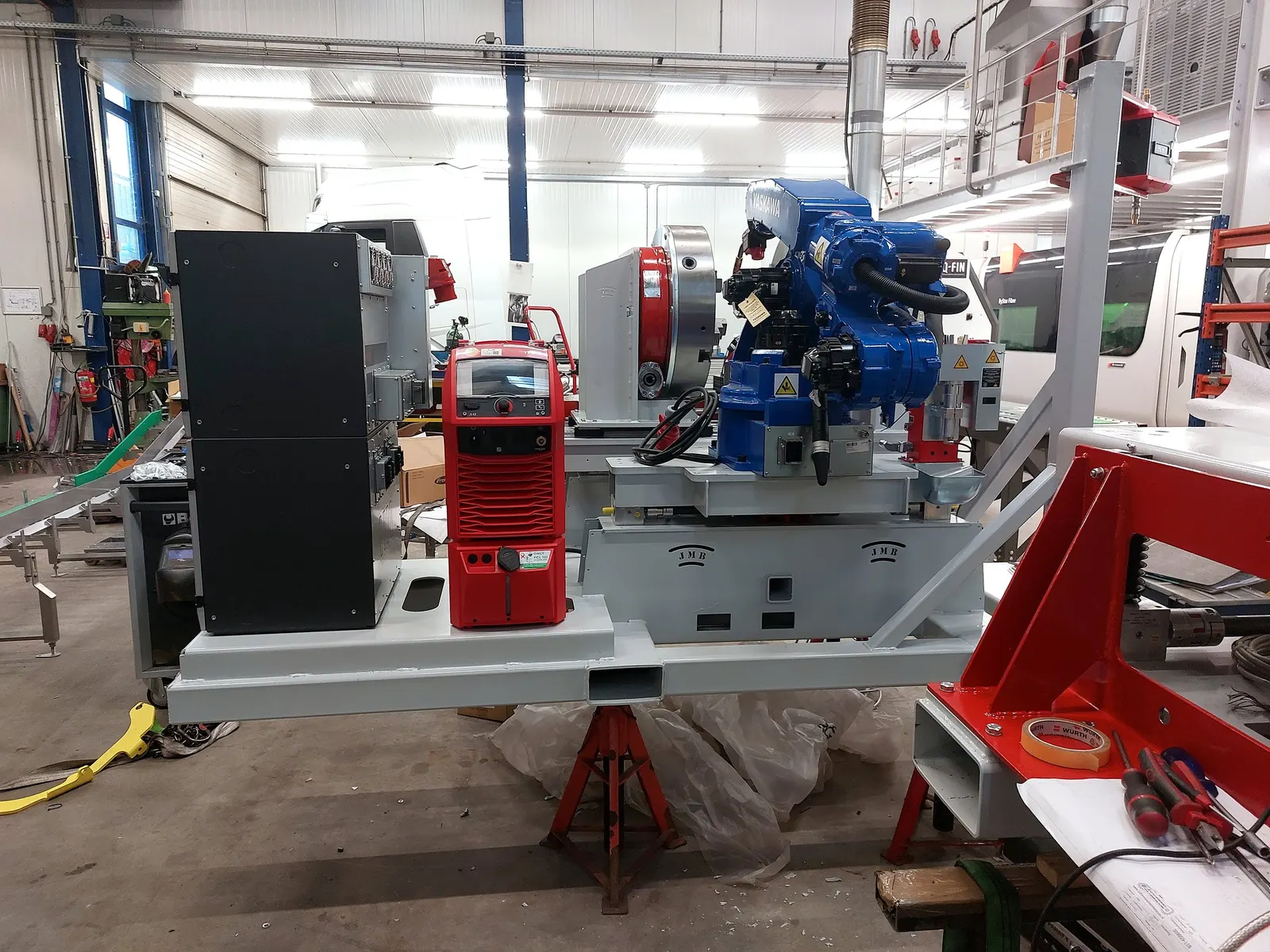
Welding robot in one of the welding cells