FAAY Vianen, production line B
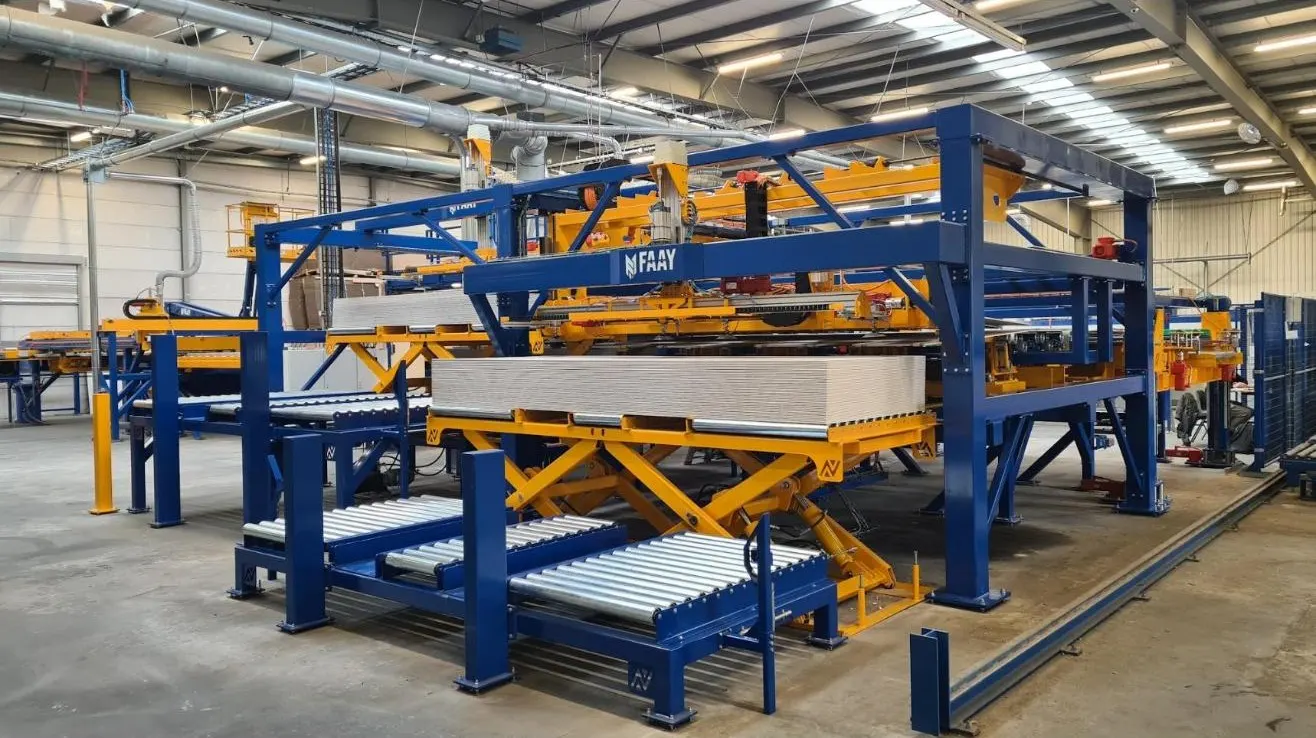
For the production line for wall panels with a flax and gypsum core, we supplied machines, steelwork and the controls, with cameras.
- Client
- FAAY Vianen
- Location
- Vianen
- Division
- Metal and Control Systems
- Specialism
- Machine building
What we did
FAAY Vianen makes sustainable wall panels with a core of flax and gypsum. We have worked for FAAY for many years, as their regular partner for steel, machine building and controls in their factory.
For production line B we supplied machines, steelwork and the controls. The line saws and glues the flax boards into an endless core board, mills and glues it on a cross table, and in the assembly station builds up the wall with gypsum top layers that vacuum frames pick from the stack. Stackers, destackers, a drying line and the outfeed complete the line.
The machines, steelwork and control panels were made in our production hall in Oudewater. AVASTO Control Systems took care of the electrical engineering, the PLC software, the operator interface and the cameras. Since handover, we have been developing the line further with FAAY, step by step.
Our work on this project
- board infeed with a saw module that finds the board edge itself
- endless core board: hot-melt gluing and flying cut-to-length sawing
- cross table with milling cutter and cold glue
- assembly station with column lift, flippers and side belts
- top-layer station with two vacuum frames and a measuring sensor
- stacker, destacker, drying line and outfeed
- controls in CODESYS, operator interface in JMobile
- ten cameras for remote support
The controls of line B
Line B is one of our most extensive control systems. Five stations build a wall together and wait for each other via fixed handshakes. The software is written in CODESYS and structured per station from its own program units and function blocks, with the operator interface in JMobile on Exor touchscreens.
Around seventy devices are connected to a single Profinet network, including 56 SEW drives, Hitachi remote IO in every control panel, valve terminals with pressure regulators for the vacuum frames and a safety PLC.
Simulation runs through this project like a common thread. Early on, we built a conveyor simulation in JavaScript that runs in the browser: the boards move from infeed and buffer via the slot milling machine, the hot-melt gluing station and the clamping belt to the carousel belt, with sensors, stoppers and adjustable speeds per conveyor. Using that simulation and a speed calculation, we determined the cycle time and the choice of motors.
Next came a 3D simulation, built from the 3D models of the assembly station and the top-layer feed supplied by engineering partner VREBV. We first drove it via an SQL database, later directly via OPC UA. In a graduation project, the 3D model was linked to the real CODESYS software and the JMobile operator interface: a digital twin in which you can operate the line without a single board moving. The vacuum station also ran in CODESYS simulation mode before it was installed in the hall.
- Endless core board
- Flax boards are glued together with hot melt on a clamping conveyor and then cut to length. For each board, the PLC calculates whether the clamping conveyor needs to go to the gluing or the sawing position, and continuously tracks the length before and after the saw.
- Saw modules
- The saw uses a sensor to find the edge of the board itself and then cuts. At the board infeed, the saw moves in three directions: height, length and along the conveyor.
- Assembly station
- A column lift with four columns that must move in sync, with a correction measurement per column, four flippers and movable side belts that build up the wall.
- Top layers with vacuum
- Two vacuum frames pick up the gypsum boards, with and without tilting. How a board is picked up is stored as a recipe with steps and blow-off pressure. A measuring sensor determines exactly where the board is while it is moving.
- Recipes per wall
- For each wall type, the operator records the core type, the top-layer lengths, the number of grooves at top and bottom, the positions and the stack height.
- Tracking boards
- Our own product tracking, with measuring windows and sensors, follows every board through the line, just like the tube tracking we wrote for VST.
- Safety
- A ReeR safety PLC with light curtains and Euchner safety doors. Anyone who wants to enter the line requests access; the process first moves to a safe state before the door is released.
- Diagnostics
- Time-stamped alarm history, monitoring of cylinder and drive run times and step tracing per station, so that a fault can be traced quickly.
- Data and reporting
- The PLC writes the production data to a MySQL database. The operator sends a report per date from the touchscreen, and we read out the data for analysis with our own Python program.
- Remote access
- Via eWON we can look into the controls remotely, and with the cameras along the line we can also see what is happening in the hall.
An operator interface that puts the operator in charge
A line with five stations must be easy to follow, even for a new operator. That is why we set up the touchscreen interface so that FAAY can run the line itself, without needing a programmer.
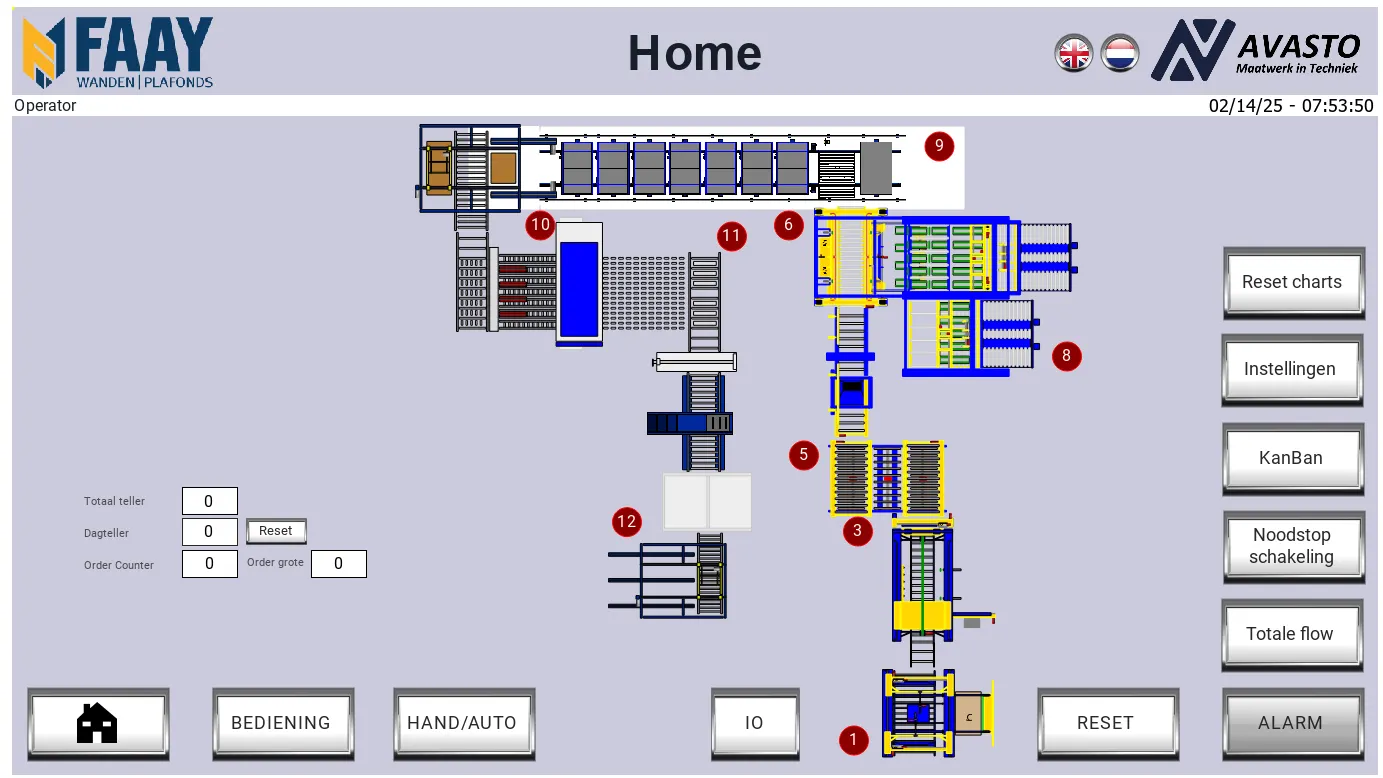
- Overview at a glance. The home screen shows the entire line; tap a station and you are on the right page. Colours show for each station whether it is in automatic mode, ready to start or in fault. The screen works in Dutch and English.
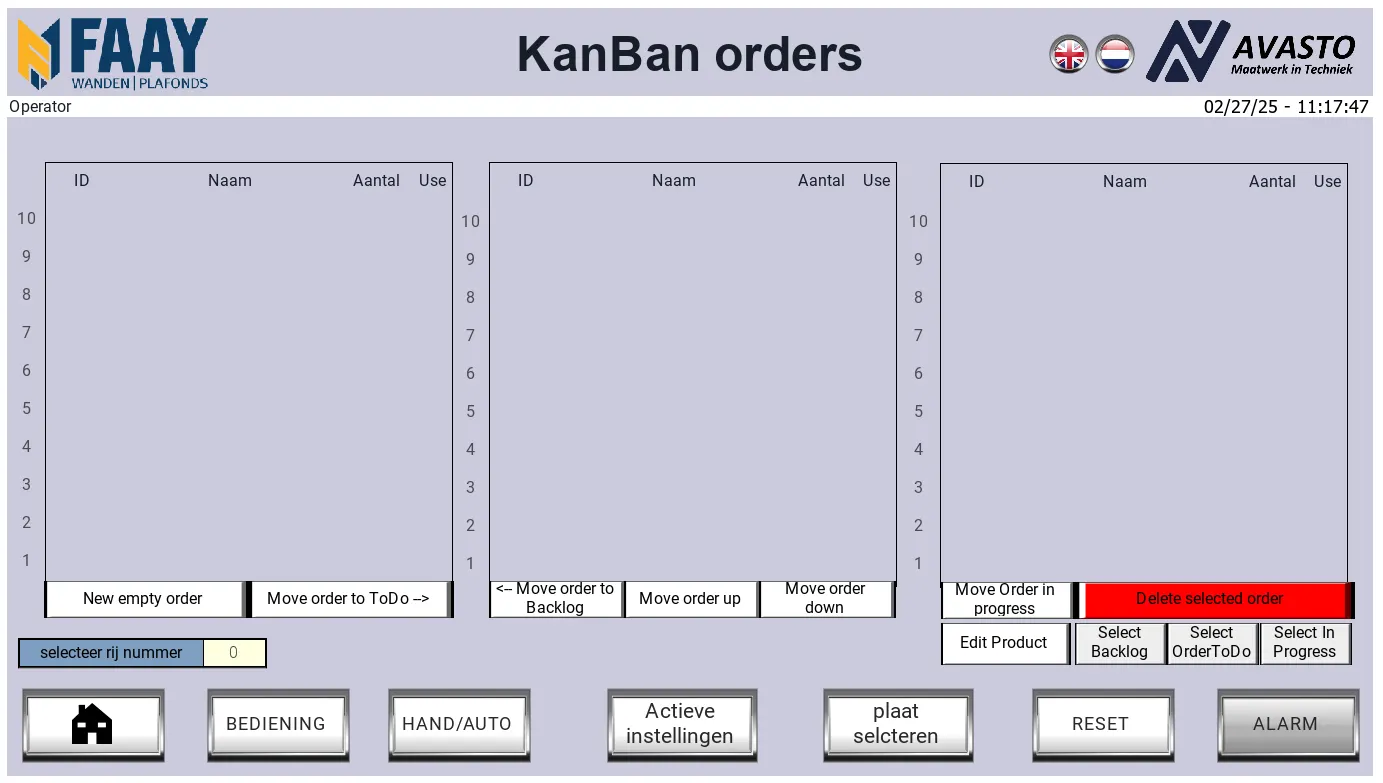
- Queueing orders with kanban. The operator selects a wall by FAAY product code or via a product selector, puts the order in the queue, and the line picks up the next order automatically. Dimensions, sawing and milling options and the quantity are then already set.
- Teaching in new products. With the board builder, FAAY defines a new wall: materials, lengths, widths and thicknesses per layer. From then on, the line knows the product for good.
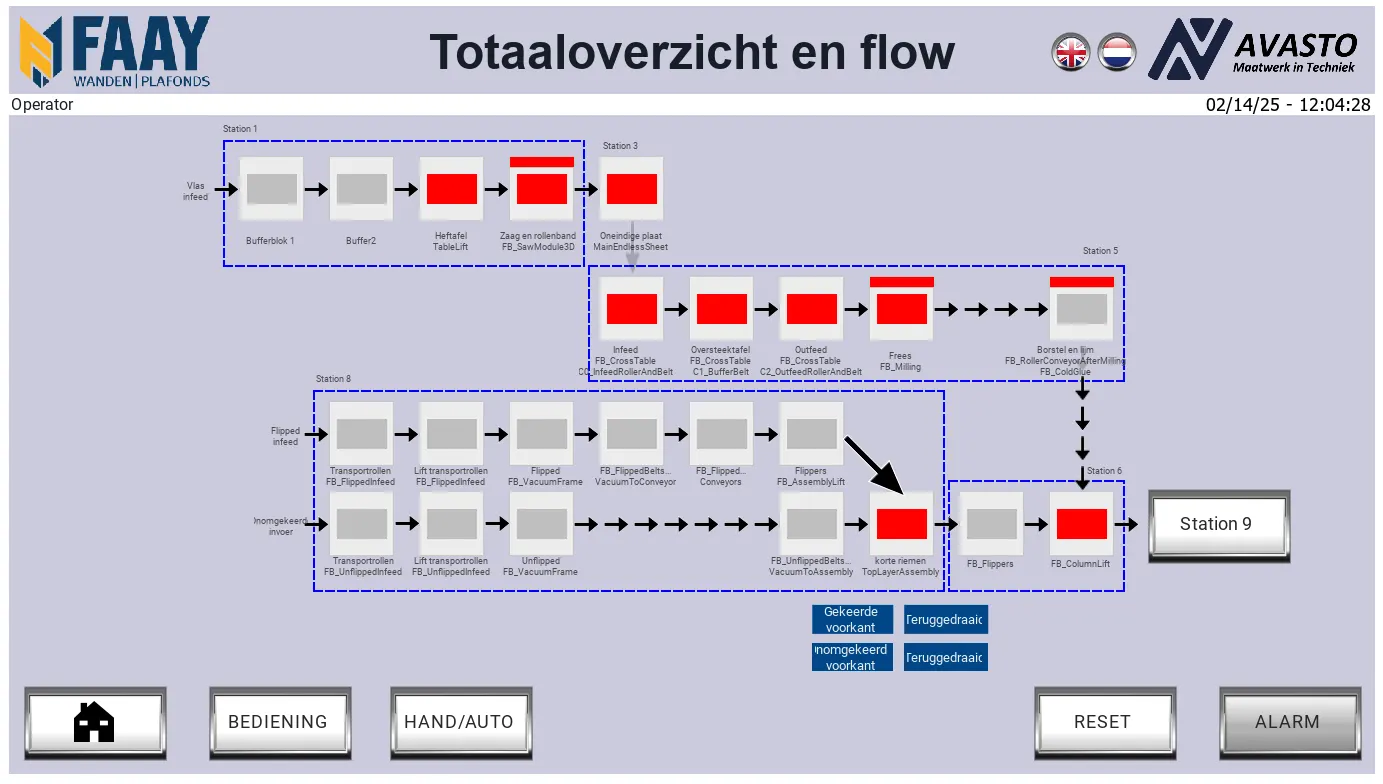
- Which board is where. A flow screen shows the positions of the boards, and at each station a jammed board or action can be reset separately, without stopping the whole line.
- Faults found fast. Alarms with history, an overview of which emergency stop or door is active, and an IO page with all sensors and motors. That is of immediate use to the maintenance team.
Handover includes a dedicated manual for the operator panel, with an explanation and screenshots for each page.
Cameras along the line
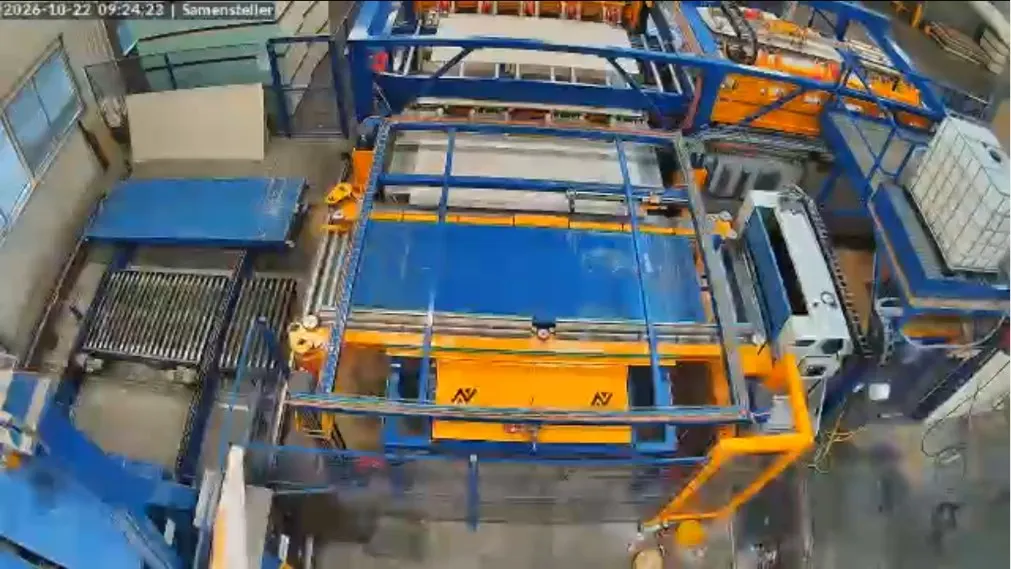
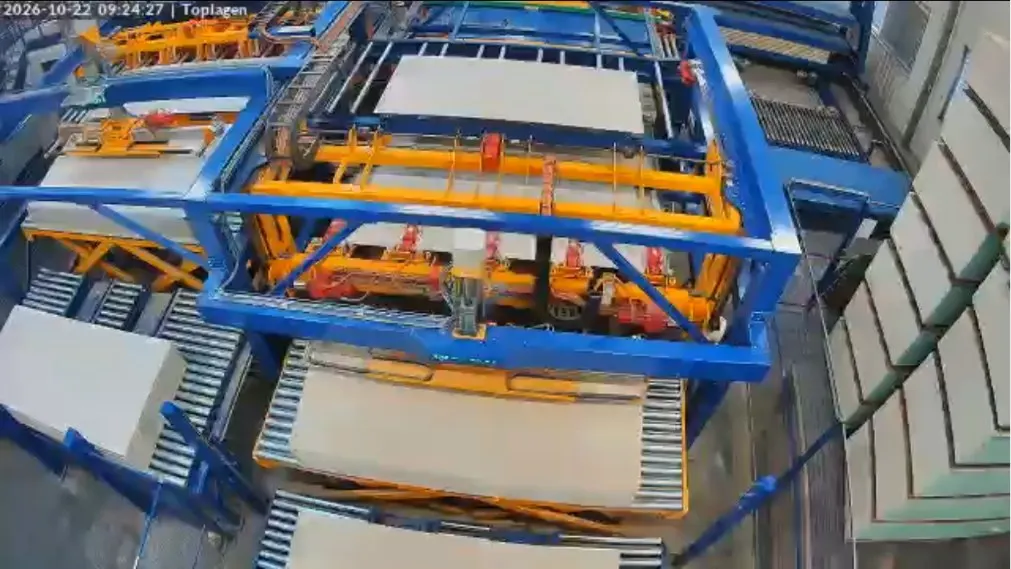
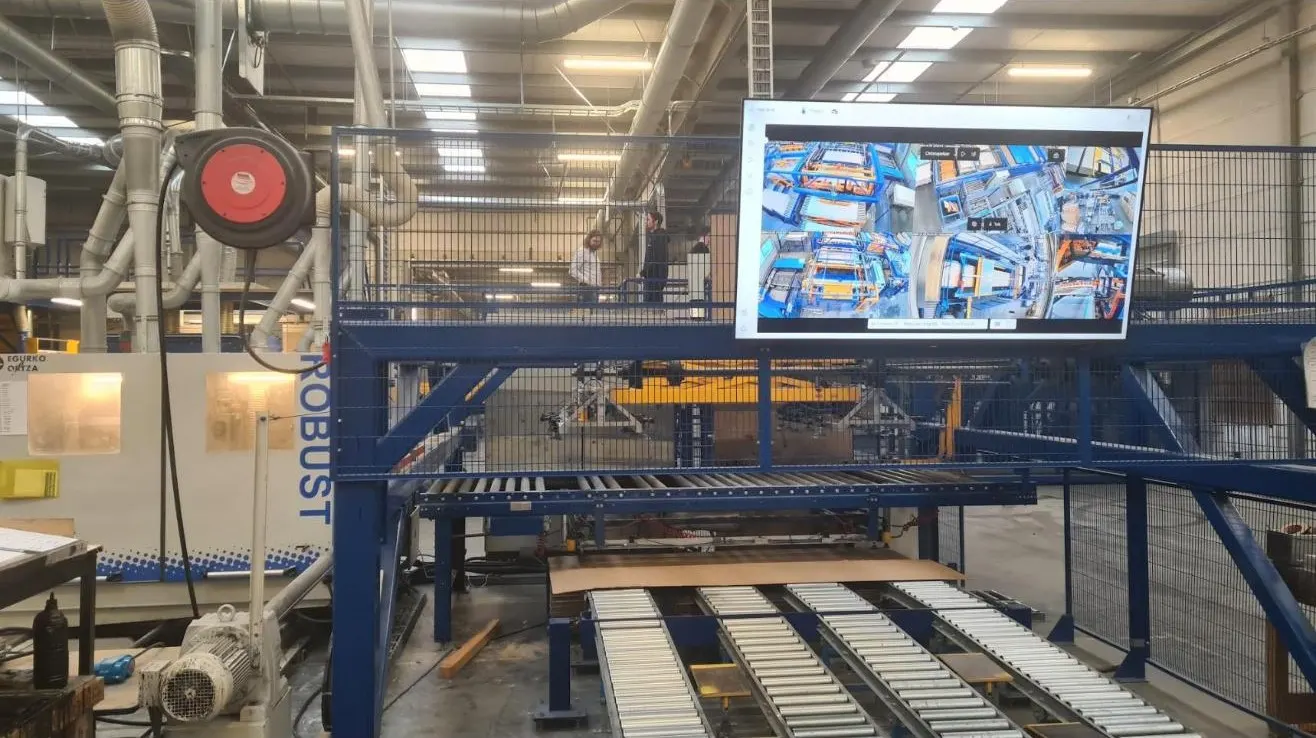
Ten cameras hang above line B, at locations including the flax infeed, the gluing positions, the assembly station, the top layers, the stacker and the destacker. In the hall, a large screen shows all images at once, so the operator has an overview of the whole line.
For our remote support they are worth their weight in gold. If FAAY calls with a fault, we look into the controls via eWON and into the hall via the cameras. The footage is recorded, so we can also look back at what happened just before a fault. This way we solve many issues without driving to Vianen.
We offer camera support on several production lines. And the images can do more: with image recognition on the same cameras, situations can be detected automatically, such as a person in a zone, a skewed board or a full stack. In the PLC, that detection can trigger an alarm, a notification or extra information for the operator. More about cameras and image recognition.
Project photos
Click a photo to view it full size.
Vacuum frame picking up a board (video) 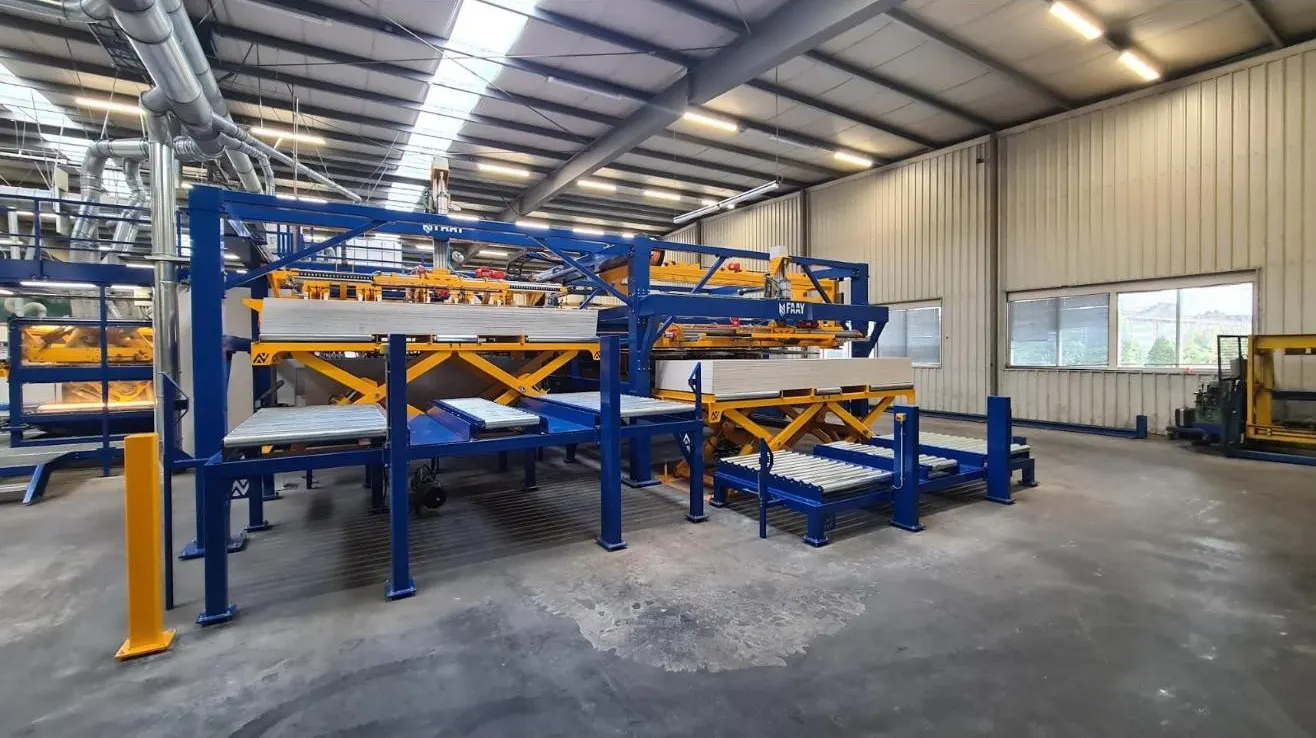
Line B stations with gantries, scissor lift tables and roller conveyors 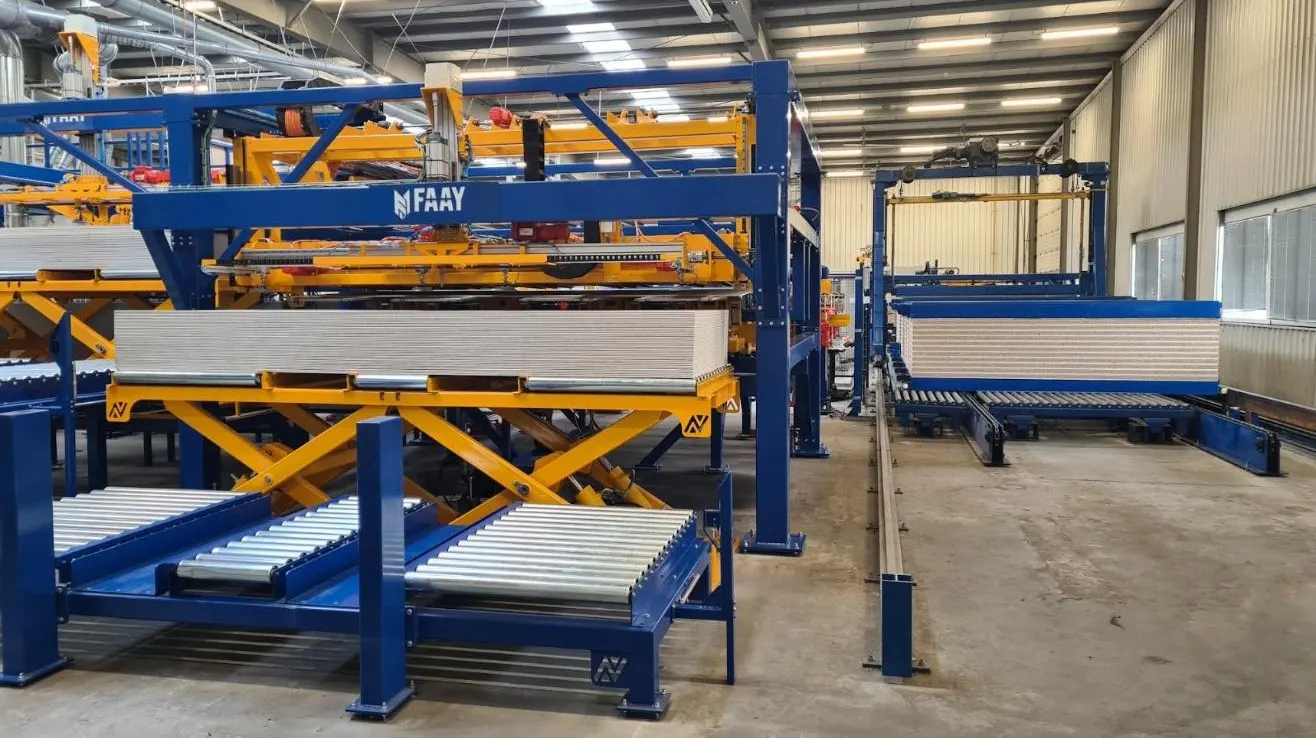
Stacks of gypsum boards and core boards on the roller conveyors 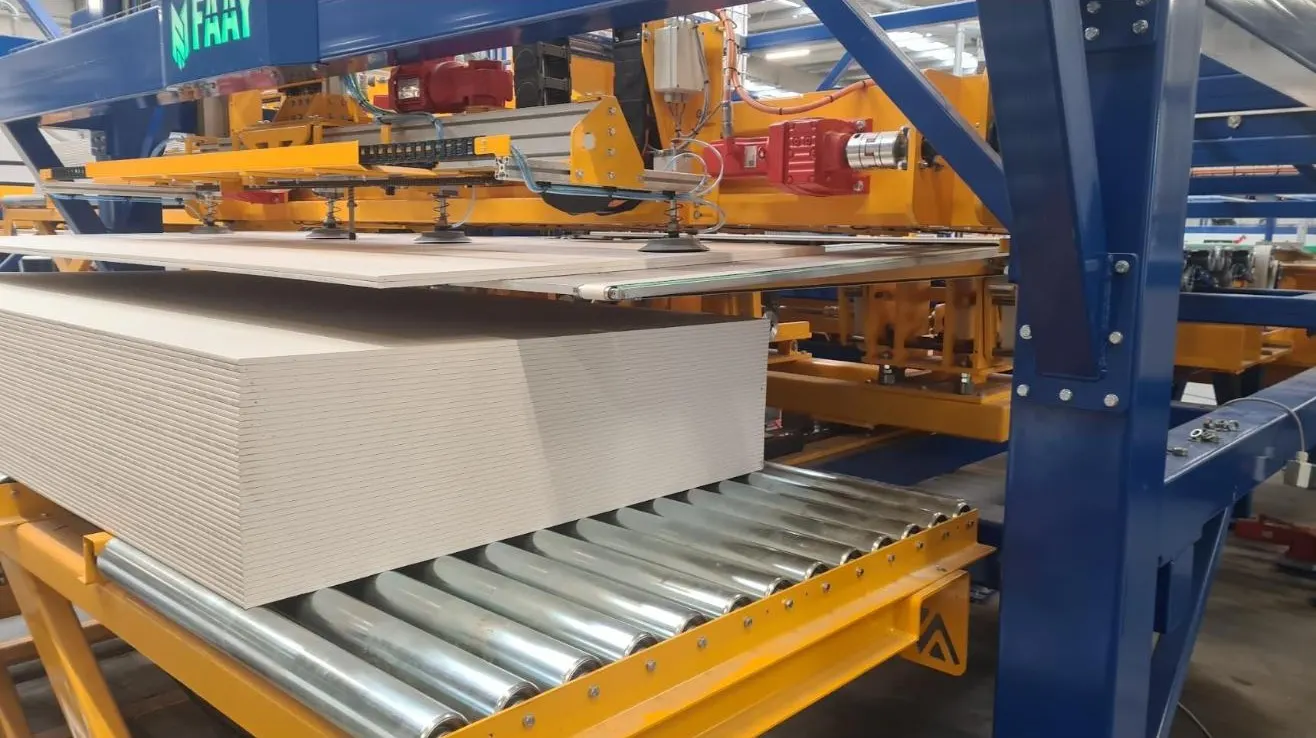
Vacuum frame picking a gypsum board from the stack 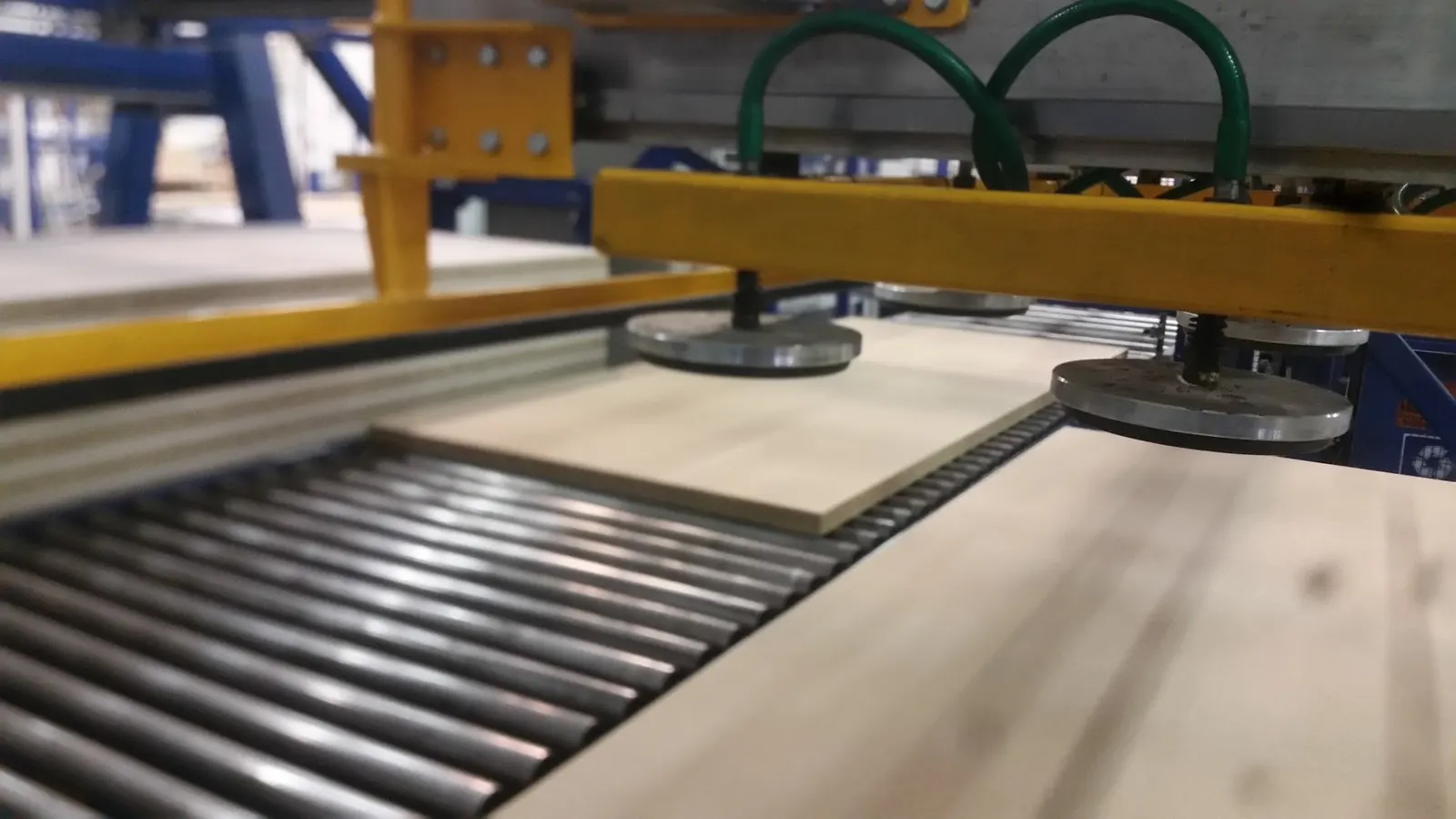
Suction cups of the vacuum frame on a board 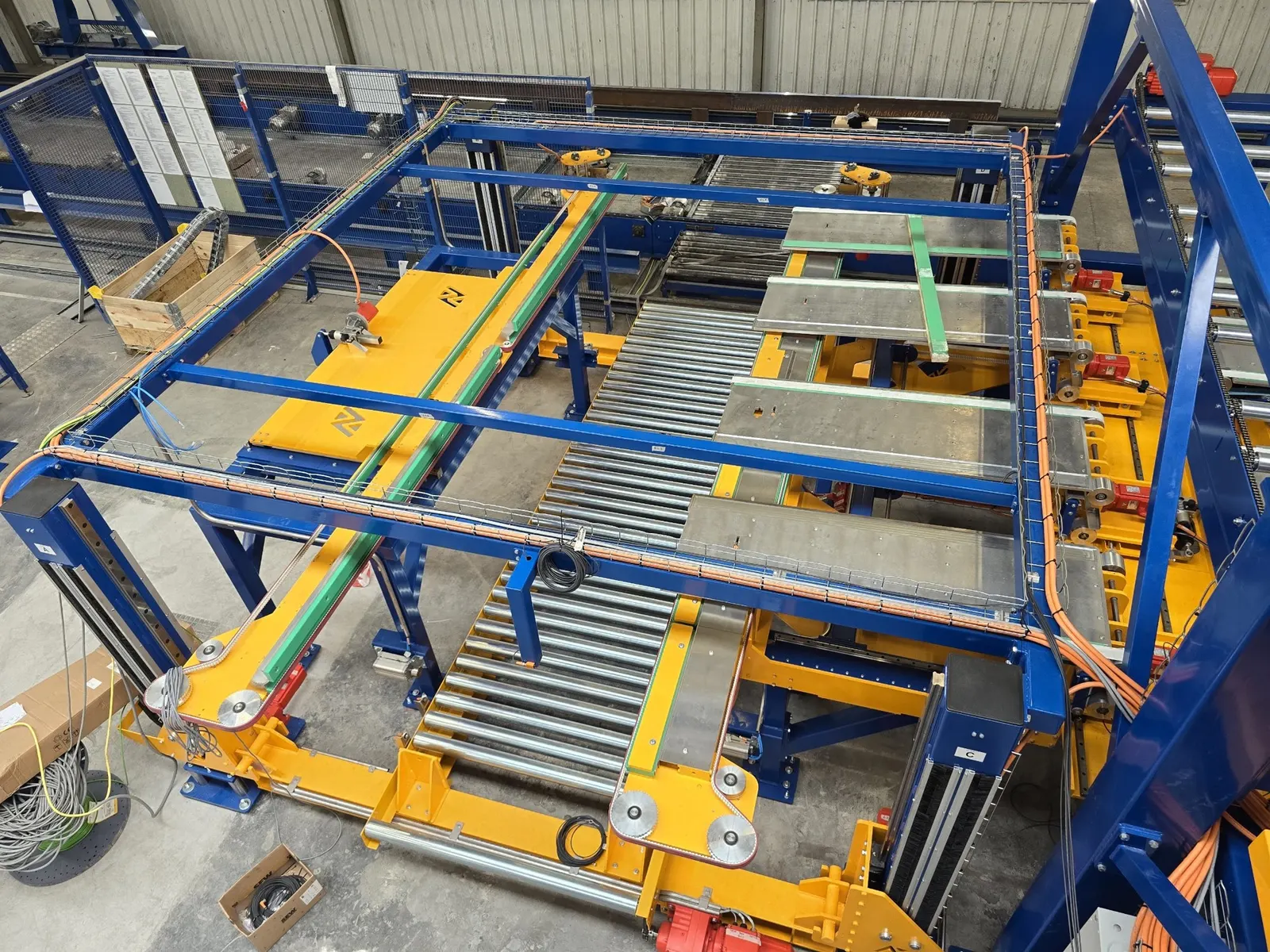
Gantry with roller conveyors and side belts seen from above during construction 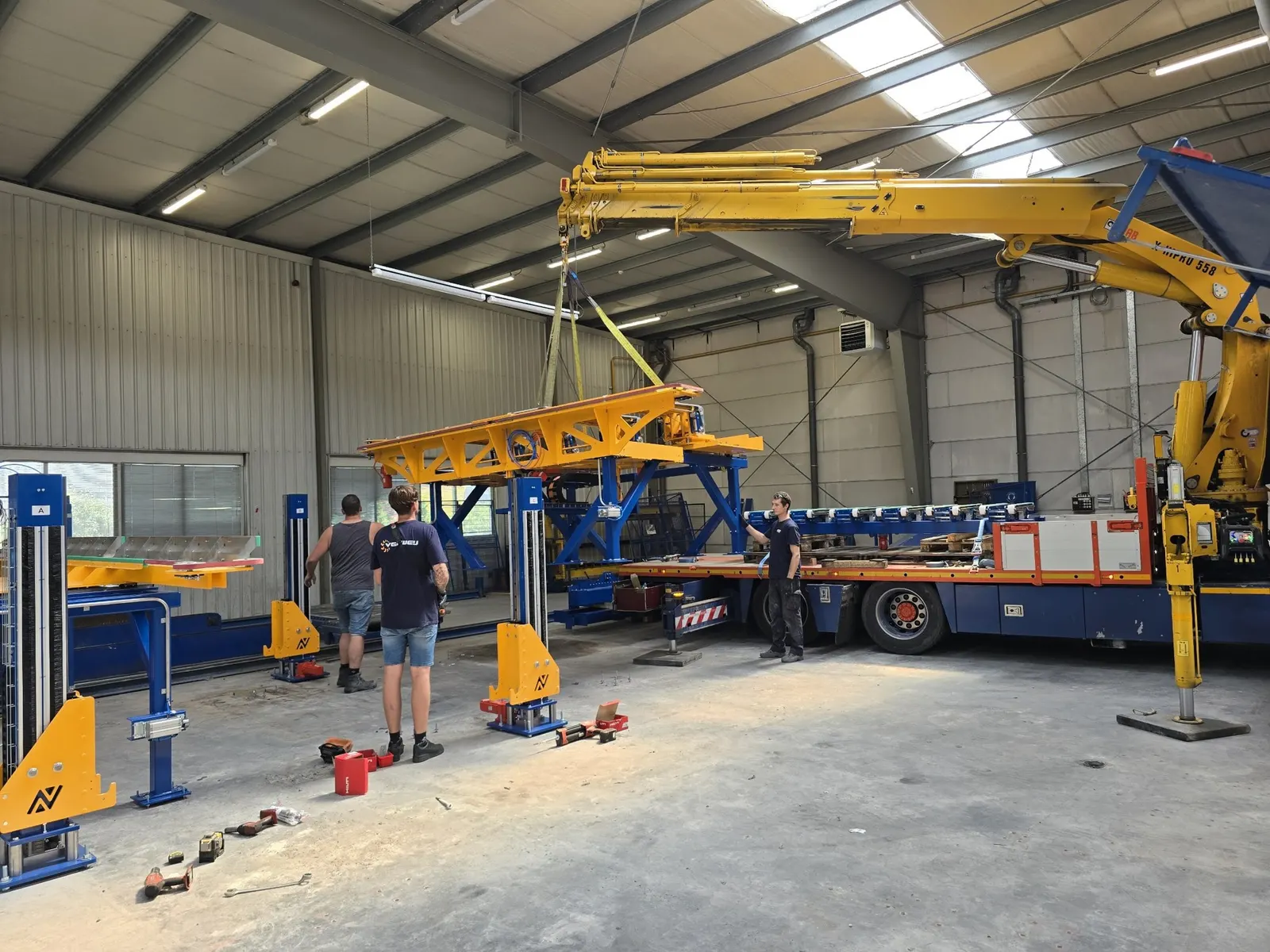
Installing a station with the mobile crane 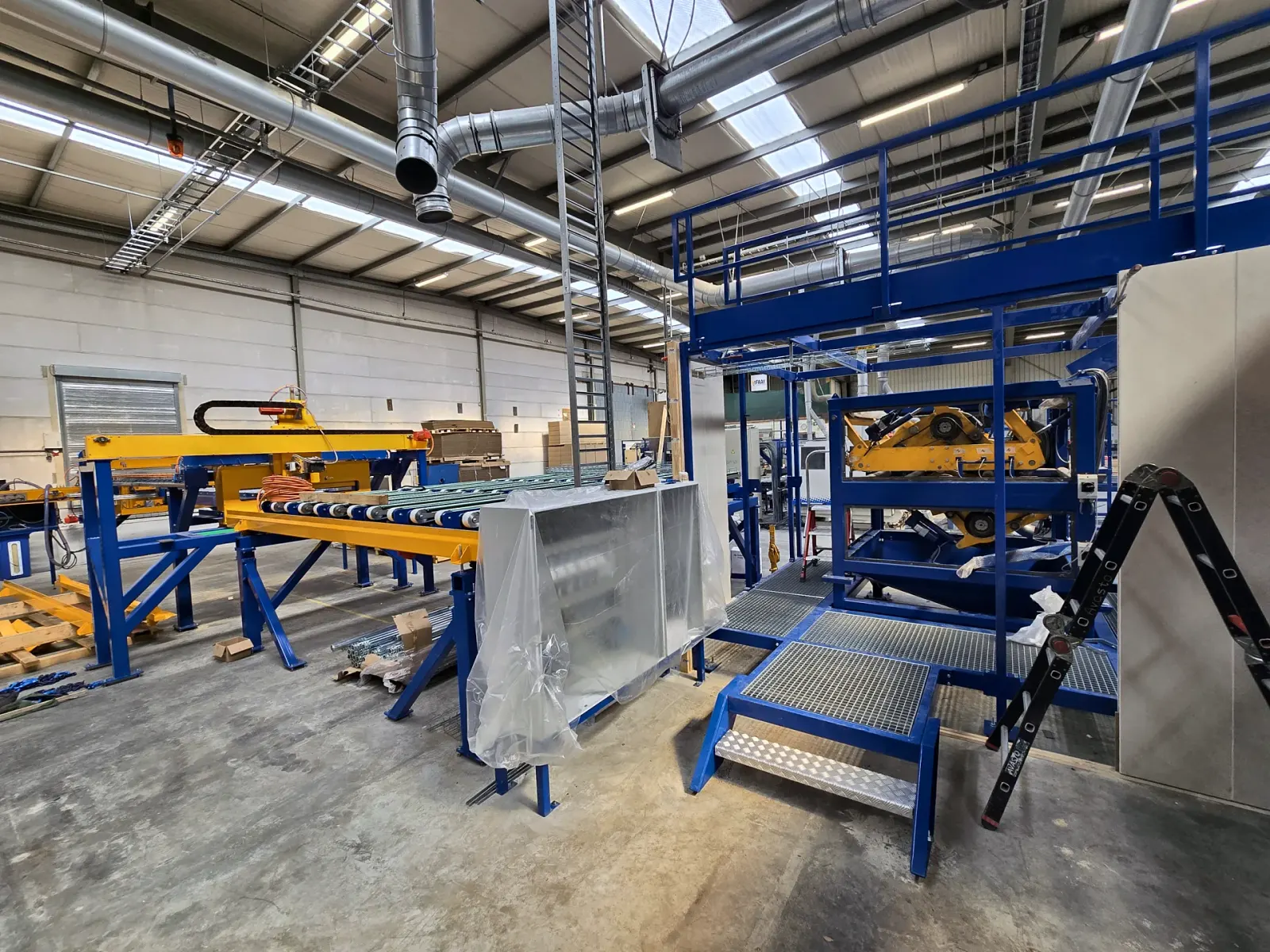
Production line with blue steel frames, roller conveyors and platform in the factory hall Conveyor simulation in JavaScript (video)